
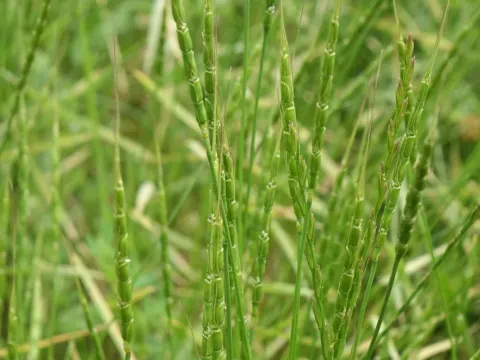
Aegilops tauschii
Aegilops tauschii
Aegilops tauschii is a wild diploid grass belonging to the Poaceae family. It is best known in agriculture as the D-genome donor of hexaploid bread wheat (Triticum aestivum), making it an indispensable resource for scientists working on wheat improvement and crop resilience.
What the section contains
Aegilops tauschii
The plant originates from the arid and semi-arid regions of Eurasia, with a natural distribution stretching from the Caucasus and the Caspian Sea region through Iran and Afghanistan into Central Asia. It typically thrives in harsh environments where other competitive grasses may struggle to survive.
Botanically, it is an annual species characterized by its slender stems and narrow, hairy leaves. Its spikes are distinctive, featuring long, stiff awns that aid in seed dispersal and protection against herbivores in its native, often rugged, habitats.
Regarding environmental requirements, Aegilops tauschii demonstrates extreme tolerance to drought and salinity. It is frequently found on poor-quality soils, including stony slopes and disturbed lands, where it utilizes its robust root system to secure water resources in competitive desert ecosystems.
Agricultural use is primarily limited to scientific research and breeding programs. By introgressing genes from Aegilops tauschii into cultivated wheat, agronomists aim to develop modern varieties with superior drought resistance, heat tolerance, and improved nutritional profiles for global markets.
Aegilops tauschii is naturally susceptible to various cereal pathogens, including stripe rust and powdery mildew. However, because it maintains a large reservoir of wild genetic variation, many accessions possess unique resistance genes that are currently being mapped and transferred to elite wheat lines.
Insect pests such as cereal leaf beetles and aphids can impact the plant during the growing season. Despite these threats, its evolutionary history in harsh climates has endowed the species with strong defense mechanisms that protect it from total crop failure under heavy pest pressure.