
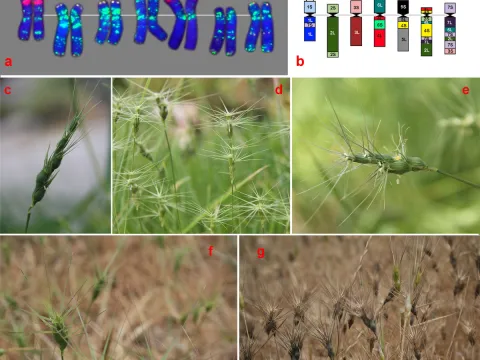
Aegilops umbellulata
Aegilops umbellulata
Aegilops umbellulata is an annual grass species that naturally germinates in the autumn, allowing the seedlings to establish a robust root system before the onset of winter. In its native habitat, this biological timing is essential for survival during the hot, dry summer months.
What the section contains
Aegilops umbellulata
In scientific research and breeding programs, seeds are typically sown in controlled environments such as greenhouses. The recommended sowing depth is shallow, usually not exceeding 2-3 centimeters, to ensure that the small seeds have sufficient energy to reach the surface.
Seed dormancy is a notable biological characteristic of this species. To achieve uniform germination in experimental settings, researchers often apply pre-sowing treatments, including cold stratification, to break the natural dormancy mechanism of the embryos.
Sowing timing in nurseries is often adjusted to align with the specific photoperiod requirements of the species. Proper timing ensures that the flowering stage coincides with optimal conditions for hybridization with other Aegilops or Triticum species.
Density management is crucial when cultivating this species for genetic research. Adequate spacing allows for maximum tillering and individual plant assessment, which is vital for evaluating phenotypic traits in breeding populations.
As a member of the Poaceae family, Aegilops umbellulata is highly adapted to arid and semi-arid environments. It thrives in well-drained, lime-rich, or rocky soils, demonstrating a remarkable ability to survive in nutrient-poor substrates.
Light availability is a critical requirement for this species. It demands high levels of solar radiation during its growth cycle; insufficient light intensity significantly suppresses tillering and reduces the overall reproductive output of the plant.
The species is tolerant of a wide range of temperatures but prefers temperate conditions during the vegetative phase and warmer, drier weather during grain filling. It shows high resilience to brief, cold snaps, though it is sensitive to waterlogged conditions.
Aegilops umbellulata does not require high levels of soil fertility. In fact, excessive fertilization, particularly with nitrogen, can lead to disproportionate vegetative growth, which can hinder the plant's natural reproductive success in breeding trials.
Water management should be careful and focused on preventing soil saturation. Proper aeration is necessary to maintain root health, as the species is highly susceptible to root decay diseases if exposed to standing water or high humidity at the root zone.
Aegilops umbellulata is not grown for commercial grain production because its seeds are small, encased in tough glumes, and prone to shattering at maturity. Its economic value lies almost entirely in its immense utility for crop improvement.
The yield of this species in a research context is measured by the successful production of viable seeds for further cross-breeding. Harvesting is conducted meticulously before full maturity to prevent the loss of seeds due to the plant's natural shattering mechanism.
The genetic yield potential of this plant is utilized by breeding programs to transfer desirable traits, such as stress resistance, high protein quality, and disease resistance, into common wheat varieties. This makes the species a cornerstone of wheat genetic resources.
Productivity per square meter is significantly influenced by the level of maintenance and environmental control. In optimized nursery conditions, the plant displays high reproductive output, providing a consistent supply of seeds for genomic research.
Beyond seed quantity, the biochemical yield, specifically the presence of unique storage proteins or resistance genes, is the primary parameter for success in using this species for the genetic enhancement of bread wheat.
One of the primary reasons for the scientific interest in Aegilops umbellulata is its inherent resistance to many cereal pathogens, including various races of rust and powdery mildew. It serves as a vital repository of resistance genes for wheat.
While the species is hardy, it can still be affected by specific cereal pests such as aphids or cereal flies that target the developing inflorescence. The plant's tough, often pubescent foliage acts as a natural physical barrier against many common pests.
Root rot pathogens represent the most significant threat when cultivating the species in greenhouse conditions, particularly if humidity levels are poorly controlled. Maintaining dry soil surfaces is an essential preventative measure.
Seed-borne diseases are minimized in breeding programs through rigorous seed treatment protocols. This ensures that the genetic material remains pure and that research data is not compromised by the spread of pathogens in the field.
Weed management is typically performed mechanically, as the use of herbicides is limited by the fact that Aegilops umbellulata shares many biological characteristics with common grass weeds, making it difficult to use non-selective or selective chemicals safely.