
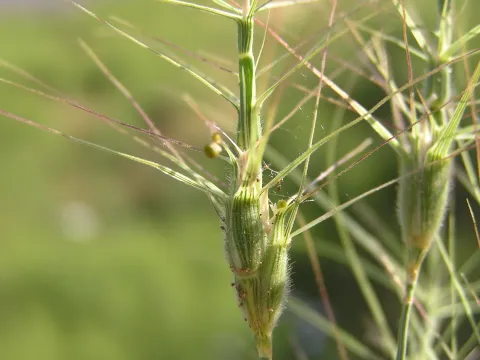
Aegilops columnaris
Aegilops columnaris
Aegilops columnaris is an annual grass species belonging to the Poaceae family. It is widely recognized as a wild progenitor and a crucial genetic resource for the improvement of common wheat (Triticum aestivum).
What the section contains
Aegilops columnaris
The native distribution of this species spans from the Eastern Mediterranean to Central Asia. It thrives in diverse environmental conditions, including arid, semi-arid, and Mediterranean climates characterized by long, hot summers.
Regarding soil requirements, Aegilops columnaris is highly adaptable and can flourish in poor, skeletal, or saline soils. It is well-suited for habitats where moisture availability is the primary limiting factor for plant growth.
Botanically, the plant is distinguished by its cylindrical, column-shaped spikes, which contain several fertile spikelets. Its robust growth habit allows it to maintain vigor under harsh environmental stressors.
The primary economic and scientific utility of this plant is found in plant breeding programs. Its genome contains valuable genes that confer resistance to biotic and abiotic stresses, which are actively incorporated into modern wheat cultivars.
As a wild-growing species, Aegilops columnaris exhibits superior natural resilience compared to domesticated cereals, allowing it to survive various environmental pathogens.
However, it remains susceptible to common cereal pathogens, including stem rust (Puccinia graminis) and powdery mildew, particularly when grown under non-optimal artificial conditions.
Insect pests such as cereal aphids and Hessian flies may occasionally infest the plants, though they rarely cause significant economic damage in natural stands.
Fungal pathogens in the soil can potentially affect the root zone if the soil drainage is insufficient, which is uncommon in its natural rocky habitat.
Maintaining healthy populations of this species for seed collection requires careful management of humidity levels and pest exclusion in controlled research environments.