
Aegilops peregrina
Aegilops peregrina
Description
Growing requirements
Aegilops peregrina is a wild herbaceous plant belonging to the grass family (Poaceae). It is historically significant as a wild relative of cultivated wheat species, contributing valuable genetic traits to global crop improvement programs.
The plant originates from the Mediterranean basin and the Middle East. It is well-adapted to semi-arid environments, thriving in poor, stony, or clay soils where common crops might fail due to lack of nutrients or moisture.
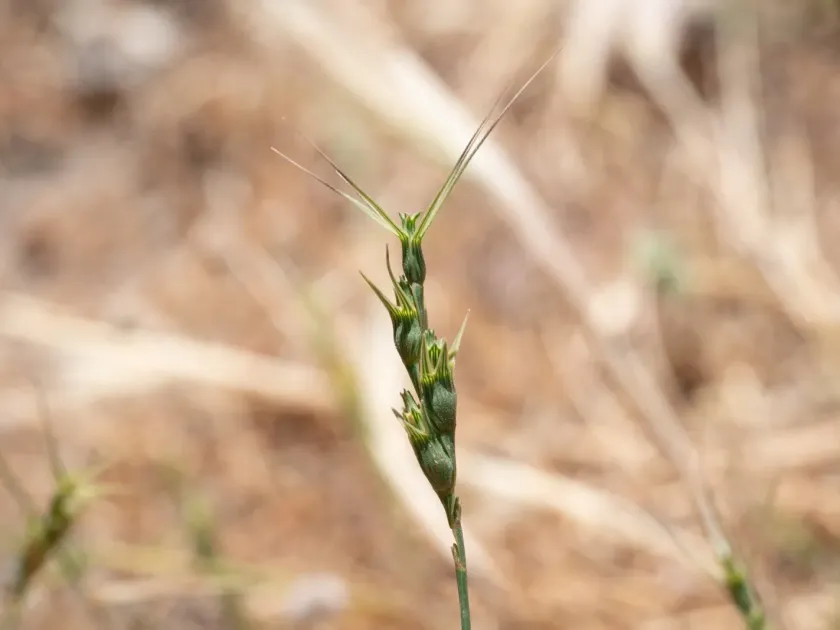
Morphologically, Aegilops peregrina features slender stems and spikes that fragment upon maturity. This natural dispersal mechanism allows the plant to spread effectively across diverse landscapes and disturbed habitats.
In modern agricultural systems, it is often classified as a weed that competes with winter cereal crops. Its physiological resilience to abiotic stress makes it a tough competitor for water and soil nutrients in infested grain fields.
Beyond its weed status, it is a key genetic resource. Breeders frequently utilize it to introgress genes for disease resistance, such as tolerance to stem rust and drought, into commercial wheat varieties.
Main diseases and pests
Aegilops peregrina is susceptible to a variety of fungal pathogens that are common to the Poaceae family, including rusts and powdery mildew, which can persist in its tissues.
Various insect pests, such as cereal aphids and Hessian flies, utilize this plant as a host during certain stages of their life cycle, which can contribute to local outbreaks in neighboring crops.
Environmental threats also include potential infestation by root rot pathogens in areas with high humidity, though the plant is generally more resistant than domesticated cultivars.
Management of these threats in agricultural landscapes often involves the implementation of crop rotation and targeted herbicide applications to prevent the build-up of inoculums.
Effective control is essential to prevent Aegilops peregrina from becoming a reservoir for viruses and bacteria that affect yield quality and quantity in standard wheat farming.