
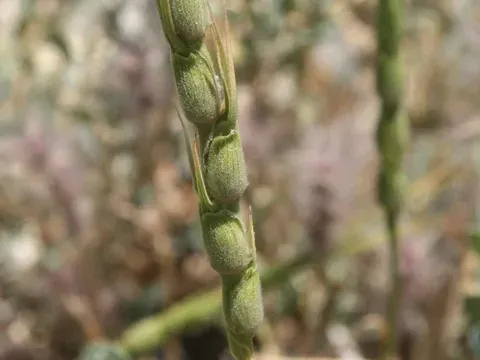
Aegilops crassa
Aegilops crassa
Aegilops crassa is a wild annual grass that does not serve as a commercial crop but rather exists as a weed in agricultural landscapes. Its life cycle typically initiates in autumn when seeds germinate given sufficient soil moisture, leading to the formation of overwintering seedlings.
What the section contains
Aegilops crassa
Within its native range, the species demonstrates remarkable adaptability to timing. This allows it to compete effectively with winter cereals, as the plant utilizes early spring moisture to establish a robust vegetative structure before the crop canopy closes.
Biologically, Aegilops crassa belongs to the Poaceae family and exists as both tetraploid and hexaploid forms. Because of its genetic proximity to common wheat, this species is frequently studied by breeders looking to introgress stress-tolerance genes into wheat cultivars.
From an agronomic perspective, managing this weed requires integrated crop rotation involving row crops. Since seeds can remain viable in the soil for several years, sowing certified, clean seed is critical to prevent field infestation.
Systemic herbicide application is most effective during the early growth stages. Agronomists often suggest a combination of chemical control and mechanical tillage to deplete the seed bank within the topsoil layer.
Aegilops crassa displays exceptional resilience to harsh climatic conditions. It is primarily distributed in regions with a semi-arid or continental climate, characterized by high drought tolerance and the ability to withstand extreme temperature fluctuations.
The species has minimal soil requirements. It thrives on poor, rocky, and saline soils where domesticated cereals often struggle, demonstrating its role as a pioneer species in harsh environments.
Minimal rainfall during the growing season is sufficient for the plant to complete its reproductive cycle. Its root system is highly efficient, accessing water and nutrients from deep soil profiles that are unavailable to many other competitors.
The native range encompasses Western Asia, the Caucasus, and Central Asia. In these areas, it is commonly found on pastures, roadsides, and abandoned lands, from where it eventually encroaches into agricultural fields.
High competitiveness regarding soil nutrients makes it a problematic weed for wheat fields. It aggressively occupies open spaces and inhibits the development of crops, particularly in nitrogen-deficient environments.
The primary threat posed by Aegilops crassa is its role as a reservoir for diseases affecting wheat. It serves as a host for various pathogens, including rusts and powdery mildew, which can easily transition to cultivated wheat crops.
Cereal flies are among the most common pests that utilize this grass. Aegilops provides a vital food source for these insects, maintaining their populations during periods when the main crop is absent or dormant.
Infestation by Aegilops significantly degrades the quality of harvested grain. Due to the morphological similarity of the seeds to those of wheat, cleaning the crop is difficult, often leading to reduced grain grades and economic losses.
Viral diseases, such as wheat streak mosaic virus, can successfully overwinter in the tissues of Aegilops crassa. This creates a persistent infection source, increasing the disease pressure for subsequent cereal crops in the field.
To mitigate these threats, regular monitoring of field margins is essential. Eliminating hotspots of this weed around the perimeter of production areas is a standard practice to reduce the risk of pathogen spread.