
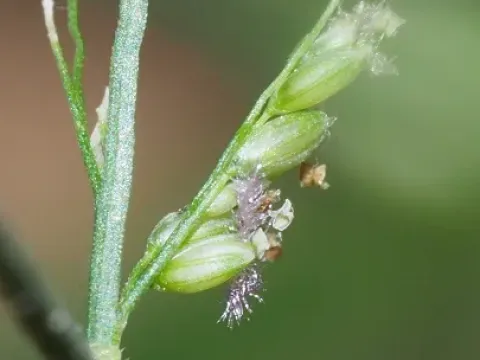
Acroceras munroanum
Acroceras munroanum
Acroceras munroanum is a perennial herbaceous plant belonging to the Poaceae (grass) family. It is recognized for its adaptability to moist environments and its robust vegetative growth patterns in tropical and subtropical regions.
What the section contains
Acroceras munroanum
Sowing typically takes place at the onset of the rainy season or when soil temperatures reach a consistent range of 22–28 degrees Celsius, ensuring optimal conditions for germination and early establishment.
The crop can be propagated through seeds or vegetatively using stem cuttings, which possess nodes capable of developing roots, making it a flexible species for pasture establishment.
The plant demonstrates high vigor, forming dense mats that can efficiently cover soil surfaces, which is beneficial for preventing erosion and managing weed pressure in agricultural settings.
Establishing the crop requires careful site selection, focusing on areas with sufficient moisture to support the rapid development of stems and foliage during the initial growing phase.
Acroceras munroanum thrives in moisture-rich environments. It is not drought-tolerant and performs best in soils with high water retention or in regions receiving frequent, reliable rainfall.
The species prefers fertile, loamy soils but shows significant resilience in various substrates, including heavy clay soils, provided that the drainage conditions are not excessively stagnant.
Light availability is critical for biomass accumulation. While the plant can tolerate partial shade, it reaches maximum production potential under full solar exposure.
The ideal soil pH for this grass ranges from 5.5 to 7.0. Ensuring proper soil fertility, particularly nitrogen levels, is essential to sustain the high growth rates typical of this species.
Agronomic management often involves periodic fertilization to replenish nutrients removed during grazing or mowing, thereby maintaining the productivity of the grassland over time.
The primary agricultural use of Acroceras munroanum is as a fodder source. It provides highly palatable green matter for cattle, sheep, and other livestock, especially when harvested in early growth stages.
Yield performance is closely linked to grazing intensity and management. Rotational grazing systems are recommended to prevent overgrazing and ensure the plant maintains its ability to regenerate foliage.
The nutritional profile of the grass remains favorable for livestock until the onset of the reproductive phase, after which the stem becomes lignified, reducing its overall digestibility.
With intensive management and appropriate fertilizer application, the species can produce significant annual yields, providing a reliable source of feed throughout the active growing season.
The plant is highly valued for its leaf-to-stem ratio during early development, ensuring that animals receive high-quality intake during daily grazing cycles.
Like many members of the grass family, Acroceras munroanum is susceptible to various fungal pathogens, such as rusts and leaf spot diseases, especially in hot and humid climates with low air circulation.
Pest populations, including grass-feeding insects and various larvae, can negatively impact crop biomass, particularly in young stands where regrowth is sensitive to herbivory.
Preventative measures include maintaining appropriate planting densities and ensuring proper field sanitation to reduce the buildup of pathogens and pest populations in the canopy.
In cases of severe infestation, an integrated pest management approach, emphasizing biological controls and judicial use of chemicals, is the most effective way to protect yield.
Monitoring the health of the stand during high-growth periods allows for early detection of potential threats and prompt implementation of corrective agronomic measures.
Harvesting for fodder or hay should be executed prior to the plant reaching the full flowering stage to preserve the highest levels of protein and energy content in the stems and leaves.
Mowing equipment should be calibrated to cut at a sufficient height to protect the base of the plant and its nodes, which are vital for rapid and vigorous regrowth after the harvest.
Hay production requires efficient drying techniques to minimize nutrient losses, as the high moisture content of the plant makes it prone to spoilage if not cured properly under favorable weather.
Efficient logistics are needed after the harvest to ensure the forage is stored or utilized while maintaining its nutritive value and palatability for livestock.
Post-harvest care, including light fertilization or soil aeration, helps reinvigorate the crop, preparing the root system for the next cycle of vegetative production.