
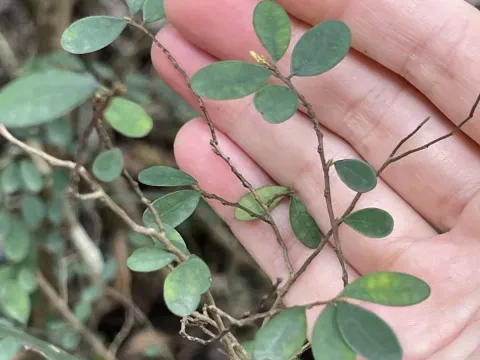
Phyllanthus cochinchinensis
Phyllanthus cochinchinensis
Phyllanthus cochinchinensis requires a warm, tropical climate for successful germination, typically aligning with the start of the rainy season or stable warm weather.
What the section contains
Phyllanthus cochinchinensis
The seeds possess a hard coat that often requires scarification or soaking in warm water for 24 hours to improve the uniformity of seedling emergence.
Sowing should take place in high-quality, well-draining seed-starting mix within a greenhouse environment where temperatures remain between 25°C and 30°C.
Once seedlings develop their first set of true leaves, they should be carefully transplanted to larger containers or directly into the prepared field beds.
Strategic spacing is essential to ensure adequate airflow around each individual plant, which significantly reduces the risk of fungal proliferation during growth.
As a member of the Phyllanthaceae family, this crop thrives in environments that mimic its natural tropical habitat, favoring consistent warmth and humidity.
The soil must be rich in organic matter and possess an excellent drainage profile, as waterlogged conditions quickly lead to root decay in this species.
Phyllanthus cochinchinensis prefers bright, indirect sunlight, especially in the early growth stages, to avoid heat stress or leaf scorching under intense sun.
Soil pH should ideally be kept in the slightly acidic to neutral range, which supports the optimal uptake of essential nutrients like nitrogen and potassium.
Consistent moisture management is key; however, care must be taken not to overwater, as the plant exhibits significant sensitivity to excessive soil saturation.
The yield of this crop is measured by the total biomass harvested, which is primarily valued for its botanical and pharmacological applications.
By implementing selective harvesting techniques, farmers can encourage the plant to produce secondary growth, thereby extending the total harvest per season.
Optimizing irrigation and providing balanced fertilizer applications during the vegetative phase are critical factors for maximizing dry matter output per hectare.
Monitoring the harvest timing is vital, as the concentration of specific active compounds can fluctuate depending on the maturity of the plant leaves.
Successful large-scale production relies on synchronized growth phases, allowing for efficient harvesting cycles that maintain high quality across all batches.
Root rot and various fungal leaf spots are the primary agricultural threats, often exacerbated by poor field hygiene and inadequate drainage systems.
Pests such as spider mites and aphids are frequently attracted to the tender foliage during dry periods, potentially causing significant yield loss.
Cultural control methods, such as clearing debris from around the base of the plants, are highly effective in reducing the pressure from soil-borne pathogens.
If chemical or organic interventions are necessary, they must be applied selectively to protect the beneficial insects and ensure the safety of the harvest.
Regular field scouting allows for the early detection of stress, enabling farmers to intervene before an outbreak becomes unmanageable across the entire crop.
Harvesting should be conducted when the foliage is fully expanded and healthy, typically just before the plant begins to transition into the flowering stage.
Tools used for harvesting must be sterilized regularly to prevent the transfer of pathogens from one section of the field to another during the collection process.
Immediate post-harvest processing is required to stabilize the plant material, which involves moving the harvest quickly to a shaded, ventilated drying area.
Drying temperatures must be carefully regulated; exceeding 40°C can result in the degradation of thermolabile compounds present within the leaf tissues.
Final storage containers should be moisture-proof and kept in cool, dark environments to ensure the potency and quality of the crop remain intact over time.