
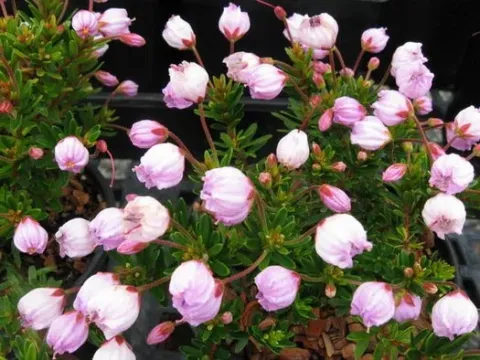
Phylliopsis hillieri
Phylliopsis hillieri
Phylliopsis hillieri is a notable intergeneric hybrid resulting from the crossing of Phyllodoce empetriformis and Kalmiopsis leachiana. As a member of the Ericaceae family, this evergreen dwarf shrub is highly sought after for its refined aesthetic appeal and its compact, tidy growth habit suitable for small garden spaces.
What the section contains
Phylliopsis hillieri
The successful cultivation of this plant relies heavily on soil conditions, which must mimic the acidic, well-draining environments typical of its parent species. A pH range between 4.5 and 5.5 is ideal; in heavy soils, gardeners must incorporate significant amounts of organic matter, such as peat moss or pine bark, to ensure proper aeration and drainage.
Exposure to light should be carefully managed, as the plant prefers dappled shade or eastern exposure that provides soft morning sun. Intense, direct afternoon sunlight can scorch the foliage and cause excessive moisture loss, leading to a decline in the plant's overall health and vigor during the peak of the summer season.
Regular maintenance involves keeping the soil consistently moist but never waterlogged. Applying a layer of acidic mulch, such as leaf mold or pine needles, is essential to conserve moisture around the shallow root system while simultaneously preventing the rapid growth of weeds that compete for nutrients.
In the landscape, Phylliopsis hillieri is predominantly utilized in rock gardens, heath beds, and as an accent plant in ericaceous borders. Its slow growth rate means it requires minimal pruning, primarily focused on removing dead or damaged wood in the early spring to maintain its desired shape and promote dense foliage development.
Pathogenic fungi represent the most significant threat to this culture, particularly under conditions of poor drainage and high humidity. Root rot pathogens can spread rapidly, leading to wilting and eventual plant collapse, necessitating strict management of irrigation cycles and the use of appropriate fungicides.
Insect pests, including spider mites and various scale insects, can occasionally infest the foliage, particularly during hot and dry spells. Effective pest control involves routine inspection of the undersides of leaves and the application of horticultural oils or systemic insecticides to prevent damage to the delicate evergreen needles.