
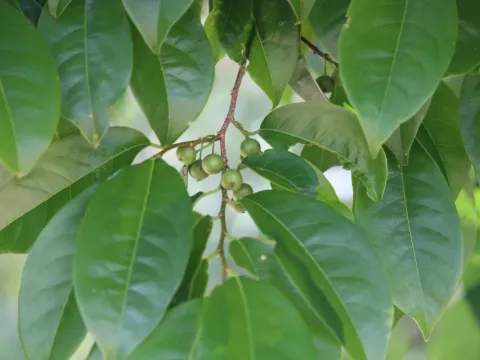
Margaritaria
Margaritaria
Margaritaria is a genus of flowering plants belonging to the Phyllanthaceae family. These plants, often formerly classified under the Euphorbiaceae family, are recognized for their unique fruit characteristics and woody growth habit, being either evergreen or deciduous trees and shrubs.
What the section contains


Margaritaria
The natural range of Margaritaria spans across tropical regions of the world, including Africa, Asia, and parts of the Americas. They typically thrive in moist forest habitats, where they occupy various levels of the canopy or understory depending on the specific species.
The botanical highlight of the genus is its fruit, which manifests as a capsule. Upon maturation, these capsules often turn a distinctive bright white, creating a visual resemblance to pearls, a feature that distinguishes the genus from related plants within the same order.
Climate requirements for this culture are strictly tropical. Successful growth depends on sustained warm temperatures throughout the year, usually ranging between 22 and 30 degrees Celsius, and a consistent humidity level to prevent stress and ensure physiological development.
Soil conditions must prioritize excellent drainage. While these plants can adapt to various soil types, they are highly susceptible to root decay if water accumulates in the root zone. A nutrient-rich, neutral-to-slightly-acidic substrate is considered ideal for promoting health.
The primary utility of Margaritaria lies in its ornamental value. Its striking fruit and elegant foliage make it a subject of interest for landscaping projects in tropical and subtropical regions where the climate allows for year-round outdoor cultivation.
Historically, various species of Margaritaria have been utilized in traditional medicine by indigenous cultures. Bark extracts and leaf infusions have been cited for potential therapeutic properties, although these applications remain largely within the realm of folk botanical knowledge.
Wood from the genus is occasionally utilized for small-scale craftsmanship. It is generally not considered a primary timber source due to the scarcity of large stands of a single species and the relatively moderate density of the wood compared to commercial hardwoods.
In forest ecosystems, Margaritaria contributes to biodiversity by providing a food source for local fauna, particularly birds that consume the fruits. This mutualistic relationship is vital for the dispersal of seeds and the regeneration of the plant population.
Researchers are currently investigating the phytochemical profile of Margaritaria, as some species contain secondary metabolites that show promise in pharmaceutical testing. This ongoing work may eventually lead to new, formal agricultural or pharmacological applications.
Fungal pathogens represent the most significant threat to the cultivation of Margaritaria. Excess moisture, particularly in poorly drained soil, often leads to root and collar rot, which can cause rapid decline and eventual death of the plant if not addressed early.
Insect pests, such as scale insects and mealybugs, are frequent offenders. These pests colonize stems and leaves, feeding on plant sap and weakening the structure. Regular monitoring and manual removal are essential for maintaining plant vigor in a garden or nursery setting.
Spider mites are common in environments with low airflow and high temperatures. They damage the foliage by piercing the surface cells, leading to chlorosis and potential leaf drop, which detracts from the aesthetic quality of the specimen.
Leaf-eating caterpillars may occasionally cause damage to the foliage. While usually controlled by natural predators, in an enclosed or controlled environment, they may require careful intervention to prevent defoliation of young saplings.
The overall plant health is best maintained through rigorous sanitation practices, including the removal of dead or infected tissue, and ensuring that environmental conditions, especially airflow and soil moisture, are strictly regulated throughout the growth cycle.