
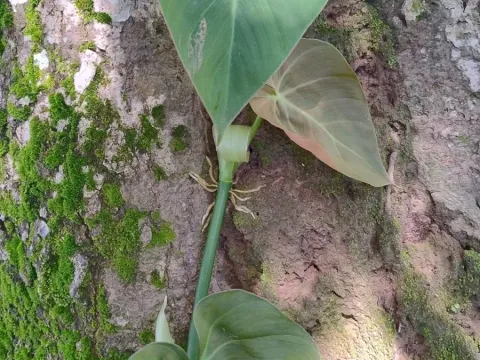
Philodendron scandens
Philodendron scandens
Philodendron scandens is a perennial climbing vine belonging to the Araceae family. Native to the tropical regions of Central America and the Caribbean, it thrives as an epiphyte in high-humidity, shaded canopy environments.
What the section contains
Philodendron scandens
The crop requires bright, indirect light to maintain its characteristic foliage color and growth rate. Direct sunlight causes severe foliar burn, while insufficient light leads to stem etiolation and a significant decrease in leaf size.
Optimal growth occurs in a well-draining, peat-based potting medium with a pH level between 5.5 and 6.5. Including components like perlite, orchid bark, and coco coir ensures the necessary aeration for root health and prevents compaction.
Environmental requirements include a consistent temperature range of 18°C to 26°C. The species is highly sensitive to cold drafts and rapid temperature fluctuations, which can trigger leaf drop and physiological stress.
The primary use of Philodendron scandens is as an ornamental horticultural crop. Its ease of propagation and tolerance to various light conditions make it a staple in interior design and vertical landscaping projects for air purification purposes.
Common pests associated with this species include spider mites, mealybugs, and scale insects. Maintaining high atmospheric humidity and conducting regular leaf cleaning are primary cultural practices for reducing pest infestation risk.
Pathogenic threats are dominated by root and crown rot, typically caused by Rhizoctonia or Phytophthora species in waterlogged, poorly aerated soils. Proper sanitation and strict irrigation scheduling are essential for disease prevention.