
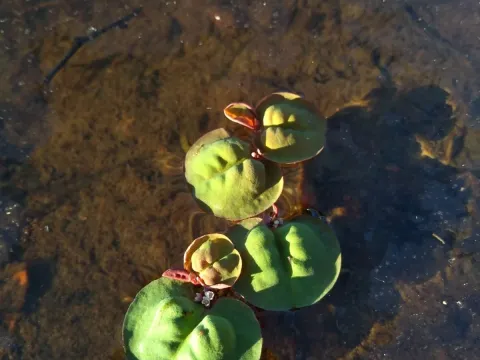
Phyllanthus fluitans
Phyllanthus fluitans
Phyllanthus fluitans, commonly known as the Red Root Floater, belongs to the family Phyllanthaceae. Native to the tropical regions of South America, particularly the Amazon basin, this plant is highly valued for its floating habit and decorative properties.
What the section contains
Phyllanthus fluitans
The botanical structure is characterized by reddish-tinted roots and rounded leaves that float on the water surface. The roots provide a critical habitat for microorganisms and assist in the biological purification of the surrounding water by absorbing excess nutrients.
Regarding climatic requirements, the species thrives in temperatures between 22 °C and 28 °C. It requires moderate to high lighting conditions to maintain its iconic red pigmentation, which is a key indicator of plant health and vitality.
Soil or substrate is not required for this floating species, as it derives all nutrients directly from the water column. Providing a consistent supply of iron and trace minerals is essential to prevent yellowing or necrosis of the leaf margins.
Water movement should be kept to a minimum as the plant prefers calm water surfaces. Excess surface agitation can lead to waterlogging of the leaves and eventual decay, which must be prevented to ensure the longevity of the plant colony.
The biomass production rate is exceptionally fast under ideal nutrient-rich conditions. Regular harvesting of excess growth is necessary to maintain ecological balance in the tank or pond, preventing the blockage of light for submerged vegetation.
The plant is susceptible to fungal infections if humidity is too low or if water quality degrades due to poor filtration. Furthermore, extreme fluctuations in water parameters, specifically pH levels, can lead to rapid chlorosis and subsequent die-off.