
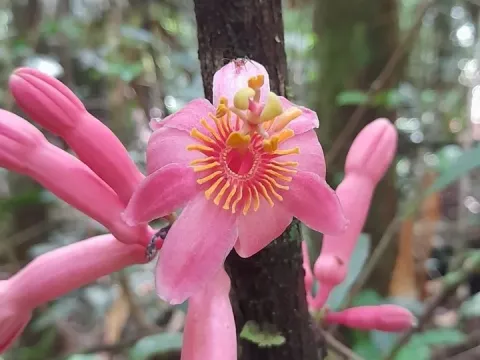
Passiflora amoena
Passiflora amoena
Passiflora amoena is a climbing perennial vine belonging to the Passifloraceae family, originating from the tropical climates of South America. As a botanical species, it is valued for its unique morphology and is increasingly studied for its horticultural potential in controlled environments.
What the section contains
Passiflora amoena
The plant requires well-draining, nutrient-rich soil with a slightly acidic to neutral pH. Proper soil structure is critical to support its vigorous root system and to ensure that moisture is effectively managed, preventing the waterlogging that often leads to root development issues.
Climate requirements include high ambient temperatures, ideally between 22°C and 28°C, and consistent humidity. In commercial cultivation, these conditions are best replicated in greenhouses, where light levels can be supplemented to encourage healthy growth and regular flowering cycles.
Agricultural management requires the installation of sturdy trellis systems. Since the plant utilizes tendrils to anchor itself, providing vertical support is essential to maximize light exposure to the foliage and ensure proper development of the entire vine structure throughout the growing season.
The primary use of Passiflora amoena lies in ornamental horticulture and scientific research. Its distinct floral structure makes it a specialized specimen for greenhouses, contributing to the diversity of tropical collections while serving as a genetic resource for breeding programs.
Fungal pathogens such as Fusarium wilt and various forms of root rot represent the most significant agricultural threats to this crop. Maintaining proper spacing and air circulation within the greenhouse is crucial to mitigating these risks and ensuring long-term plant health.
Insect pests including spider mites, aphids, and mealybugs frequently attack the tender foliage of the vine. Integrated Pest Management (IPM) strategies, which prioritize biological controls and minimal chemical intervention, are highly recommended for managing these pests in controlled production systems.