
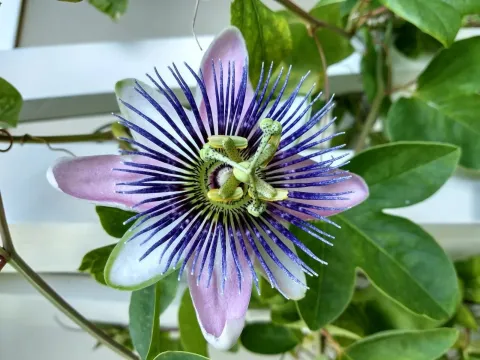
Passiflora alatocaerulea
Passiflora alatocaerulea
Passiflora alatocaerulea is a vigorous evergreen climber belonging to the Passifloraceae family, known for its distinct winged stems and complex, multi-colored blossoms. As a hybrid species, it combines resilience with high ornamental value, making it a favorite for greenhouse and container gardening.
What the section contains
Passiflora alatocaerulea
The plant thrives in bright, filtered light and requires a sunny position to produce its spectacular flowers. In temperate climates, it is typically grown in containers, allowing it to be moved indoors during winter months to avoid freezing temperatures, which can severely damage the root system.
For optimal growth, provide a well-draining, nutrient-rich soil mix with a slightly acidic pH. A combination of potting soil, peat moss, and perlite helps maintain moisture while ensuring the roots do not sit in water, which is a common cause of failure in container-grown passion flowers.
Watering should be frequent during the growing season, keeping the soil consistently moist but never waterlogged. As the plant enters dormancy in the cooler months, watering must be significantly reduced to prevent root rot, ensuring the plant remains healthy until the spring growth spurt resumes.
Regular maintenance involves pruning long, unruly stems in late winter or early spring to keep the plant within manageable bounds and encourage side-branching. Balanced liquid fertilizers applied monthly during the active season will provide the necessary nutrients for sustained vegetative growth and abundant flowering.
Common pests affecting this species include spider mites, aphids, and whiteflies, especially when grown in indoor conditions with low humidity. Regular inspections and wiping the leaves with a mild soapy solution can prevent minor infestations from spreading throughout the plant.
Fungal issues such as root rot and leaf spot are typically associated with poor drainage or overwatering. Using sterile equipment for pruning and ensuring adequate air circulation around the canopy are effective cultural practices to reduce the risk of pathogen outbreaks in the collection.