
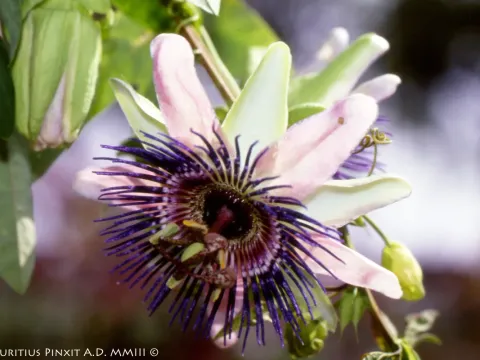
Passiflora allardii
Passiflora allardii
Passiflora allardii is a robust hybrid vine belonging to the Passifloraceae family, known for its rapid growth rate and stunning ornamental blooms. It is primarily cultivated as an indoor or greenhouse plant due to its specific climate requirements.
What the section contains
Passiflora allardii
The plant thrives in bright, filtered light and requires significant sun exposure to encourage blooming. While it appreciates morning sunlight, afternoon sun can be intense and may require shading to prevent leaf scorch and dehydration.
For optimal development, provide a rich, well-draining potting mix that retains moisture without becoming waterlogged. Regular fertilization with a balanced, liquid plant food during the growing season is essential for supporting the vine's rapid biomass accumulation.
Consistent temperatures are crucial, ideally ranging between 20 and 26 degrees Celsius during the spring and summer months. The plant is sensitive to cold drafts and should be protected from temperatures dropping below 12 degrees Celsius to avoid stress.
Trellising is a fundamental aspect of cultivating this vine. As a climbing plant with vigorous tendrils, it requires a sturdy support structure to manage its growth pattern and ensure adequate airflow between the stems.
Spider mites are the most common pest challenge for Passiflora allardii, especially in environments with low air humidity. Regular misting and proper plant spacing are effective cultural practices to deter these microscopic pests.
Scale insects can attach themselves to the stems and leaves, extracting nutrients and causing overall decline. They should be manually removed or treated with horticultural oils as soon as they are spotted to prevent large-scale infestation.
Root rot, triggered by overwatering or poor drainage, is a significant threat to the plant's health. Ensuring the soil surface dries slightly between waterings is a critical management strategy for long-term survival.
Aphids tend to congregate on the soft, growing tips of the vine, potentially causing stunted growth and leaf curling. Integrated pest management, including the use of mild soaps, can effectively control aphid populations without chemical damage.
Fungal leaf spots can occur when foliage remains wet for extended periods in poorly ventilated conditions. Improving airflow and ensuring the foliage stays dry during irrigation helps to maintain the plant's structural and aesthetic integrity.