
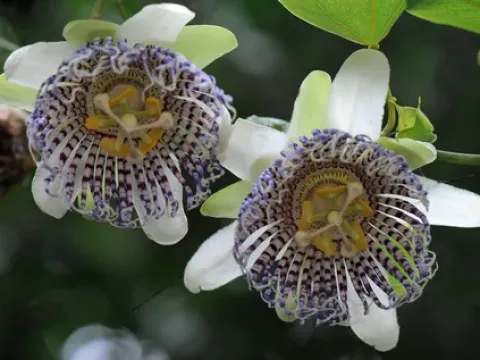
Passiflora actinia
Passiflora actinia
Passiflora actinia belongs to the Passifloraceae family. It is an evergreen woody vine native to the Atlantic forests of Brazil, thriving in humid, warm subtropical environments that characterize its natural habitat.
What the section contains
Passiflora actinia
The plant requires a stable temperature range, ideally between 18 and 28 degrees Celsius. It is highly sensitive to frost and freezing temperatures, which necessitates greenhouse or indoor cultivation in cooler climate zones to ensure survival and consistent growth.
Soil requirements involve a well-draining, nutrient-rich substrate with a neutral to slightly acidic pH. The plant demands high atmospheric humidity; low-humidity environments can lead to leaf drop and failure to produce buds.
Bright, filtered light is essential for the healthy development of this species. Direct, harsh sun during the midday hours can cause foliage scorch, so providing shade or using light-filtering materials is recommended for optimal plant health.
Cultural practices include consistent watering to keep the soil moist but not waterlogged. Periodic fertilization with a balanced mix during the active growing season is crucial, alongside regular pruning to maintain the desired shape and size of the vine.
The primary agricultural interest in Passiflora actinia is its exotic fruit, which is valued for its unique tropical aroma and flavor. In domestic and specialized horticulture, the vine is cherished for both its produce and its highly ornamental properties.
Fruit production is highly dependent on effective pollination. In greenhouse settings where natural pollinators are absent, manual cross-pollination is often required to ensure a high fruit set rate and satisfactory harvest quantities.
The fruit typically exhibits a rounded, oval shape, changing color as it matures. The pulp is succulent, containing numerous seeds, and is traditionally used in regional cuisine for juices, desserts, and various tropical-themed food preparations.
Yield consistency is achieved through rigorous pruning, as flowers are predominantly produced on new growth. By stimulating lateral branching through pruning, growers can significantly increase the number of potential fruiting sites.
Beyond the fruit, the species is a major asset in ornamental horticulture. Its complex, star-like flowers, which give the species its scientific name, make it a sought-after plant for botanical collections and display gardens.
Common pests include spider mites and mealybugs, which thrive in indoor environments with poor air circulation and low humidity. These pests can rapidly colonize the foliage and hinder the overall vigor of the plant.
Fungal diseases, such as root rot, are frequent outcomes of overwatering or poorly draining soil. To mitigate these threats, it is vital to ensure proper drainage and monitor soil moisture content throughout the year.
Leaf spot diseases can also occur, particularly during periods of high humidity combined with poor ventilation. Regular cleaning and sanitation of the growing area are recommended to prevent the spread of fungal spores.
Aphids may occasionally infest new, tender shoots, causing deformation and growth stunting. Early detection through regular monitoring allows for effective management using soap-based insecticides or biological controls.
- Regular inspection of leaf undersides for pests.
- Maintenance of adequate airflow to discourage fungi.
- Consistent irrigation management to avoid root stress.