
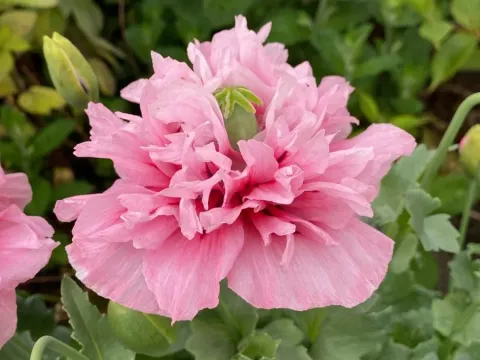
Poppy
Papaver L.
Sowing poppy should be carried out as early as possible in the spring, once the soil has reached the required physical maturity and is workable.
What the section contains


Poppy
The crop is known for its cold hardiness; seedlings can withstand light frosts, which allows for early planting to make optimal use of winter soil moisture.
Standard sowing practice involves row seeding with inter-row spacing of 20–30 cm, facilitating necessary weeding operations during the early stages of plant development.
Due to the extremely small size of poppy seeds, they must be sown at a shallow depth of 1–2 cm to ensure high germination rates and uniform emergence.
Proper plant population is critical; over-seeding leads to intense competition, reduced individual plant vigor, and increased susceptibility to diseases.
Poppies thrive best in well-structured, fertile soils, preferring neutral loams or black soils (chernozems) with high organic matter content.
This crop is highly light-demanding, requiring full exposure to sunlight for healthy development and high seed yields per plant.
Consistent moisture is necessary during the vegetative phase, but dry, sunny weather is preferred during the ripening phase to ensure high-quality seeds.
Poor drainage and soil compaction are detrimental, as they inhibit root respiration and increase the likelihood of root-zone pathogens.
Crop rotation is an essential agronomic tool; poppies should be returned to the same plot after a minimum interval of 4–5 years to break disease cycles.
Achieving high yields requires strict adherence to agrotechnical standards, including balanced mineral fertilization and efficient weed control programs.
Under optimal management and favorable environmental conditions, poppy seed yields typically range from 0.8 to 1.5 metric tons per hectare.
The number of capsules produced per plant is a primary yield component, which can be managed by maintaining optimal density and avoiding plant stress.
Seed quality, defined by oil content and purity, is highly dependent on timely harvesting and proper post-harvest processing methods.
As a high-value niche crop, poppy serves both the food industry and pharmaceutical sectors, making it a lucrative choice for specialized agricultural enterprises.
Integrated Pest Management (IPM) is essential to mitigate damage from specialized insects that target the poppy crop during its growth cycle.
Key pests that agricultural managers must monitor include:
- Weevils (Ceutorhynchus spp.)
- Pollen beetles (Brassicogethes aeneus)
- Spider mites
- Sunn pest (Eurygaster integriceps)
Fungal diseases, such as downy mildew and various root rots, pose a significant risk, particularly in cool and high-humidity environments.
Effective control measures involve a combination of certified seed treatment, preventive fungicide applications, and field monitoring to identify threats early.
Maintaining a healthy crop environment through rotation and weed management is the first line of defense against both biotic and abiotic threats.
Harvesting timing is critical for poppy crops; the crop is ready when the capsules have turned brown or grey and seeds rattle inside when shaken.
Farmers often choose a two-stage harvesting process: mowing and windrowing, followed by threshing to ensure seeds have reached the target moisture level.
Direct combining is also an option but requires careful machine settings and often the application of desiccants to achieve uniform crop maturation.
Post-harvest handling must focus on immediate drying and cleaning to stabilize the seeds, as high moisture levels lead to rapid degradation.
Ensuring the final product meets commercial purity standards is essential for successful marketing and long-term storage in ventilated grain silos.