
Great scarlet poppy
Papaver bracteatum Lindl.
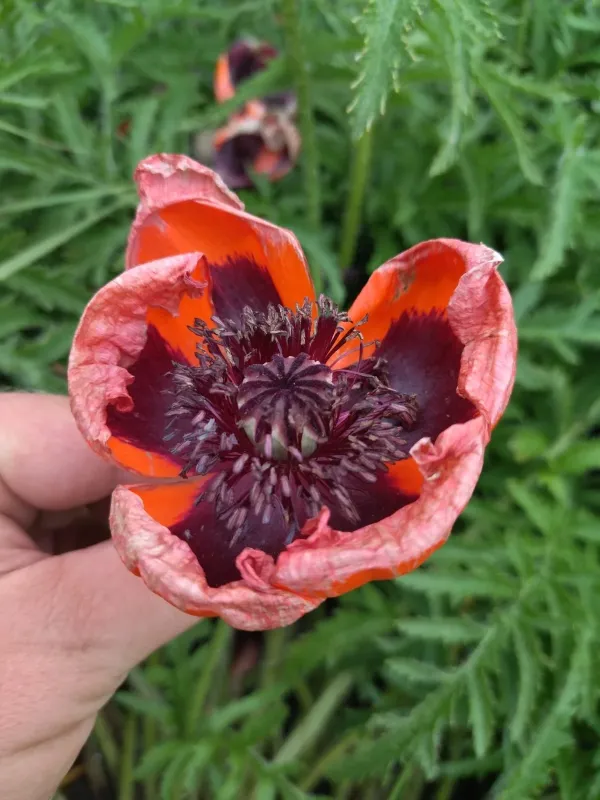
Description
Sowing dates
Papaver bracteatum, commonly known as the Great scarlet poppy, is a perennial herbaceous plant belonging to the Papaveraceae family. It is typically sown in early spring or autumn to ensure favorable moisture conditions for germination.
Given the extremely small size of the seeds, they should be sown at a shallow depth of 1-2 centimeters, ensuring they are not buried too deeply to sprout successfully.
Optimal spacing between rows is essential for this species, ranging from 45 to 60 centimeters, as plants develop large basal rosettes that require space to thrive.
Seedbed preparation is a critical step; the soil must be fine-tilled and leveled to maintain consistent moisture levels during the sensitive germination phase.
Autumn sowing is often preferred in cooler climates, as it allows for natural stratification, leading to more uniform and vigorous seedling emergence in early spring.
Growing requirements
This crop thrives in sunny, open locations with well-drained, fertile sandy-loam or loam soils. It is highly intolerant of waterlogged conditions, which can lead to root rot.
Papaver bracteatum exhibits remarkable hardiness, being capable of enduring drought conditions once established due to its deep and robust taproot system.
Soil pH should ideally be neutral or slightly alkaline. The plant does not require high levels of organic matter but benefits from balanced fertilization, particularly with phosphorus.
Field maintenance involves keeping the area free of weeds, especially during the early stages of development when the poppy plants are most vulnerable to competition.
Proper aeration is vital for the crop; dense planting should be avoided to reduce the humidity around the leaf rosettes, preventing fungal infections.
Yield
The yield of Papaver bracteatum is measured by the biomass of the aerial parts, which are harvested for their pharmaceutical components, specifically the alkaloid thebaine.
Maximum yield is generally achieved from the second year of cultivation onwards, once the root system is fully established and the plant is mature.
Production rates can be optimized by maintaining soil fertility and ensuring that the field is kept clear of pests and competing flora throughout the growing season.
Consistent climatic conditions during the flowering phase directly influence the concentration of secondary metabolites in the plant tissues.
Regular monitoring of plant health and nutrient status is essential to maintain high production yields over the multi-year cycle of the plantation.
Main diseases and pests
Fungal diseases such as downy mildew and various root rots are the primary threats, especially during periods of high humidity and poor drainage.
Pests, including aphids and the poppy root weevil, can cause significant damage to foliage and developing capsules if left untreated.
- Implementation of a rigorous integrated pest management (IPM) program.
- Application of fungicides at the first sign of leaf spot or mildew.
- Using disease-resistant seed varieties whenever possible.
- Regular cleaning of machinery to prevent the spread of soil-borne pathogens.
Crop rotation remains the best practice to prevent the build-up of pathogens in the soil, even though the poppy is a perennial crop.
Harvesting
The harvest period is critical; it is performed during the peak of flowering or just as the capsules begin to form to ensure maximum potency of the extracted substances.
Harvesting is typically carried out using mechanized cutters, followed by immediate transfer to drying facilities to halt degradation of the active components.
Drying must be conducted in controlled environments with proper ventilation to maintain product quality and avoid mold contamination.
Seed recovery can be a secondary objective, requiring careful timing to avoid excessive seed shattering in the field during the final stages of maturity.
Cleaned and dried plant material should be stored in cool, dark, and moisture-free conditions to ensure long-term stability of the extracted pharmaceutical compounds.