
Oriental poppy
Papaver orientale L.
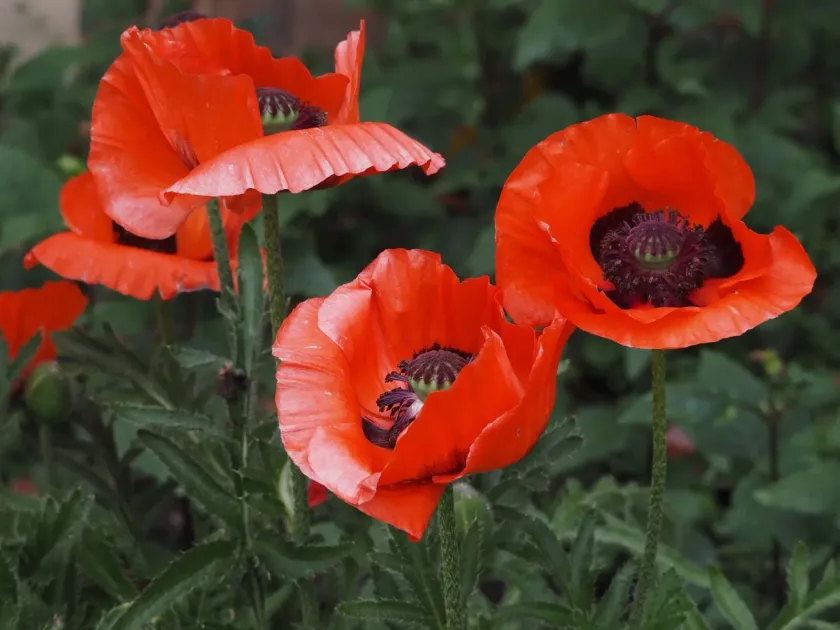
Description
Sowing dates
Oriental poppy (Papaver orientale) is a hardy perennial belonging to the Papaveraceae family. Propagation is usually achieved through seed sowing or root division, with seed sowing being the most common method for starting new populations.
Seeds should be sown directly into the soil in late autumn or early spring. If sowing in spring, seeds require a period of cold stratification to break dormancy, ensuring a high germination rate when temperatures rise.
For vegetative propagation, root cuttings or division of mature clumps are performed after the plant enters its summer dormancy period. This allows the roots to establish before the onset of the next growing season.
Seedlings develop slowly, focusing energy on building a robust root system before producing their first spectacular blooms. Proper spacing is essential, as mature plants can occupy significant space and dislike competition for nutrients.
The seeds are tiny and should be surface-sown or barely covered with a fine layer of soil. Constant moisture must be maintained during the germination phase to ensure successful establishment.
Growing requirements
Oriental poppies thrive in full sun and prefer deep, fertile, well-draining soils. They are particularly sensitive to waterlogged conditions, which can lead to root rot; therefore, soil texture and drainage are critical factors.
The plant is highly drought-tolerant once established, thanks to its deep taproot. However, consistent moisture during the spring development phase ensures larger flower heads and longer blooming periods.
Soil pH should ideally be neutral or slightly alkaline. In acidic soils, the addition of lime or dolomite is recommended to create a more favorable growing environment for the species.
Fertilization should be moderate, focusing on balanced NPK formulations early in the spring. Excessive nitrogen should be avoided as it promotes leafy growth at the expense of floral development.
Minimal maintenance is required once the plant is established. Regular weeding is necessary to prevent competition, and deadheading spent blooms can prevent unwanted self-seeding and keep the garden tidy.
Main diseases and pests
The most common issues for Oriental poppy are fungal infections such as powdery mildew, which thrive in humid or poorly ventilated conditions. Prevention involves ensuring adequate space between plants.
Pests like aphids can occasionally infest the flower buds during the peak growing season. Early detection and the use of insecticidal soap or biological controls are often sufficient to manage these populations.
Bacterial or fungal root rot is the most dangerous threat to the plant, usually triggered by poor drainage or overwatering. Infected plants should be removed immediately to prevent the spread to healthy neighboring specimens.
Leaf spot diseases may appear during wet spells, requiring the removal of infected foliage to minimize spore dispersal. Maintaining good hygiene in the garden is the best line of defense.
- Powdery mildew
- Root rot
- Aphids
- Leaf spot
Harvesting
While Oriental poppy is primarily grown for its ornamental value in landscaping, harvesting is limited to seed collection for propagation or the gathering of dried seed pods for floral arrangements.
Seed pods should be harvested when they turn tan and dry out naturally on the stalk. If harvested too early, the seeds will not be mature, resulting in poor viability.
Once collected, pods should be air-dried in a well-ventilated area. Seeds can then be extracted and stored in cool, dark, and dry conditions to maintain their viability for future planting seasons.
Harvesting the pods effectively signals the end of the plant's cycle for the season. The stalks are cut back to the ground, allowing the plant to redirect energy into its root system for the coming winter.
Dry seed pods are also a valuable aesthetic feature for winter garden displays. Proper handling during the harvesting process ensures that no seeds are prematurely scattered if natural regeneration is not the goal.