
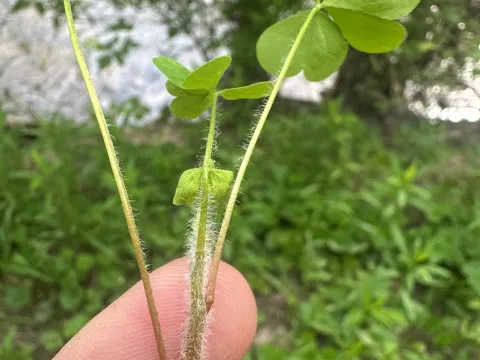
Yellow woodsorrel
Oxalis stricta
Yellow woodsorrel (Oxalis stricta) is a member of the Oxalidaceae family. Native to North America, this species has naturalized globally and is frequently identified as a persistent weed in agricultural systems, ornamental nurseries, and vegetable gardens due to its high reproductive capacity and adaptability.
What the section contains
Yellow woodsorrel
The plant typically grows as an annual or short-lived perennial with erect or decumbent stems ranging from 10 to 40 cm in height. Its leaves are clover-like and trifoliate, containing high concentrations of oxalic acid. The yellow flowers develop into explosive seed pods, a primary mechanism for the rapid dispersal of its seeds across cultivated land.
Regarding its requirements, Oxalis stricta thrives in fertile, moist, and well-drained soils but can survive in a variety of substrates, including sandy or compacted garden soils. It is highly photophilous and performs best in full sun, although it can tolerate partial shade, making it a competitive intruder in diverse cropping systems.
Agricultural management requires vigilance, as the plant can complete multiple generations in a single growing season if environmental conditions are favorable. It is primarily managed through integrated weed control strategies that combine physical removal, soil management, and timely herbicide application to prevent infestation.
While often regarded as a nuisance, the plant is occasionally harvested for culinary use in some regions, as its leaves provide a distinct sour flavor. However, from an agronomic perspective, it is classified as a significant weed that competes with crops for water and mineral nutrients, necessitating consistent management efforts.
The primary threat posed by yellow woodsorrel is its prolific seed production. A single mature plant can produce thousands of seeds, which are capable of remaining dormant in the soil bank for several years, leading to recurrent infestations even after initial eradication measures have been implemented.
Pests that affect Oxalis stricta include aphids and mites, which can sometimes act as vectors for diseases that eventually spread to high-value crops. Therefore, maintaining weed-free field margins is a crucial component of integrated pest management (IPM) to prevent the spread of diseases.
Physical control measures, such as hand-pulling or mechanical cultivation, are most effective when performed before the explosive seed capsules mature. Timing is critical because delaying control until the pod-set stage only facilitates the further distribution of seeds across the field.
Chemical control involving systemic post-emergence herbicides is often necessary for large-scale infestations. Selection of the herbicide must be aligned with the specific crop grown, ensuring that the control measure does not negatively impact the primary agricultural output while still targeting the broadleaf weed population.
Soil management, including the use of mulching in nursery or vegetable production, effectively suppresses germination by limiting the sunlight required for seedling development. Combining these cultural methods with precision tillage ensures long-term reduction of the weed's presence in the soil profile.