
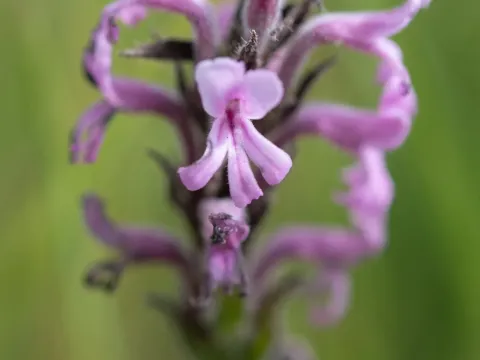
Striga bilabiata
Striga bilabiata
Striga bilabiata is a member of the Orobanchaceae family. It is recognized globally as a devastating root parasite rather than a cultivated crop, posing a constant threat to cereal production in tropical and subtropical regions.
What the section contains
Striga bilabiata
The plant originates from Africa, where it has co-evolved with local grasses. It thrives in soils characterized by low nitrogen levels and low moisture availability, often appearing in impoverished agricultural lands.
The life cycle of Striga bilabiata is strictly dependent on the presence of a host. Its seeds require germination stimulants, specifically strigolactones released by the roots of nearby host plants, to break dormancy.
Botanically, it is an autotrophic weed in its early stages but becomes parasitic upon attaching to the host's vascular system via specialized organs called haustoria. This allows it to divert water and solutes directly from the host.
Effective management requires sophisticated agronomic practices, such as the use of catch crops and trap crops, which successfully minimize the parasitic seed bank in the soil over several growing seasons.
The primary threat of Striga bilabiata is the significant reduction in crop yield. Host plants, including sorghum and maize, suffer from nutrient theft, which stunts their growth and leads to significant crop failure.
The weed acts as a "silent" parasite; by the time the green shoots are visible above the ground, the host plant has already suffered irreparable damage to its root architecture and resource allocation.
The soil seed bank is the most challenging aspect of this parasite. A single plant can disperse thousands of tiny seeds that remain viable in the soil for over a decade, making eradication extremely difficult.
Damage to the host root system often facilitates entry for secondary soil-borne pathogens, including various fungal and bacterial wilts, further complicating the physiological stress on the crop.
Sustainable control involves an integrated approach:
- Rigorous crop rotation cycles
- Application of host-specific trap crops
- Use of resistant or tolerant cereal cultivars
- Quarantine of infested agricultural machinery