
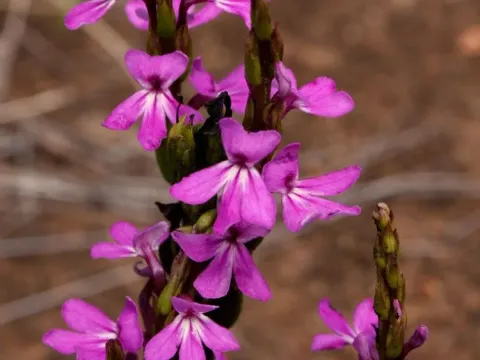
Striga passargei
Striga passargei
Striga passargei is an obligate root parasitic plant belonging to the Orobanchaceae family. It is a highly specialized plant that lacks sufficient photosynthetic capability, relying entirely on a host plant to obtain water, minerals, and carbon compounds for its development.
What the section contains
Striga passargei
The native range of Striga passargei is primarily located in tropical Africa, where it has evolved as a major biological threat to local cereal crops. It thrives in diverse soil types, especially in areas with moderate soil fertility and warm climatic conditions.
Botanically, the plant is characterized by microscopic, dust-like seeds that possess remarkable longevity. These seeds remain dormant in the soil for several years and only germinate when triggered by specific chemical exudates, known as strigolactones, released by the roots of potential host plants.
Its climatic requirements are aligned with the growing seasons of its hosts. High temperatures and periodic moisture are essential for the germination of the seeds and the subsequent attachment to the host's vascular system through specialized structures called haustoria.
From an agricultural standpoint, the plant is considered a significant weed rather than a crop. Its presence dictates specific agronomic practices, forcing farmers to adapt their crop rotations and planting schedules to minimize the risk of massive infestation and complete yield failure.
The primary threat posed by Striga passargei is its profound negative impact on host growth and vigor. Long before the parasitic shoots emerge above ground, the parasite causes severe stunting and yellowing of the cereal crop, as it siphons off essential resources.
While various insects feed on Striga passargei, none of them serve as effective biological control agents under agricultural conditions. The plant is exceptionally resilient to most abiotic stressors, making it difficult to eradicate once it has established a significant seed bank in the soil.
Pathogens affecting the parasite are rare and generally do not inhibit its rapid reproduction. The focus of agricultural management is strictly on preventing the parasite's maturation, as a single plant can produce tens of thousands of seeds, re-infesting the area for future seasons.
Management strategies emphasize the use of "trap crops," such as cotton or leguminous species, which stimulate suicide germination of Striga seeds. This process, combined with precise fertilizer application, helps reduce the parasitic pressure on the following cereal crop cycle.
Cultural methods, such as mechanical hand-pulling before the flowering stage, remain a labor-intensive but necessary practice in resource-poor regions. Integrated weed management remains the only viable approach to containing the expansion of this parasitic species in commercial fields.