
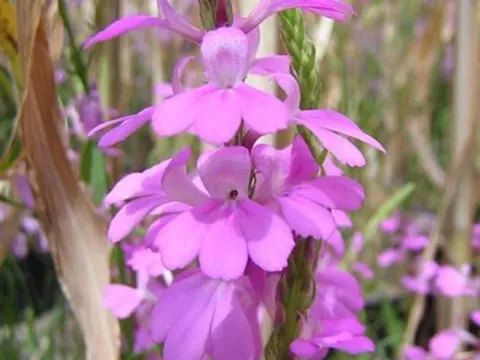
Striga latericea
Striga latericea
Striga latericea, a member of the Orobanchaceae family, is a parasitic plant known for its aggressive behavior against host species, primarily within the Ipomoea genus. It is not a crop, but rather a significant biological challenge for farmers in East Africa.
What the section contains
Striga latericea
The plant originates from the semi-arid regions of Ethiopia and surrounding territories. It has evolved to thrive in environments where seasonal rainfall dictates the growth cycles of both the parasite and its specific host plants.
Its botanical structure includes a highly specialized root system equipped with haustoria. These structures penetrate the host's roots, creating a physiological connection that allows the parasite to siphon vital nutrients and water directly from the host's vascular system.
The morphological characteristics of the plant are adapted to intense sunlight, featuring tough, upright stems and vibrant brick-colored flowers. These flowers are designed for cross-pollination in the wild, ensuring the production of vast quantities of dust-like seeds.
Growth requirements are strictly tied to the host's chemical signaling. The seeds remain dormant in the soil for years, waiting for the detection of specific compounds known as strigolactones, which are exuded by the roots of a compatible host plant.
The primary threat posed by Striga latericea is the total or near-total collapse of crop yield in infested areas. Because the damage occurs underground during the early development stages, symptoms often appear too late for effective treatment.
Pests that feed on Striga seeds or mature plants are naturally occurring but rarely effective enough to control the parasite population density. Researchers are actively studying various biological control agents, including fungi that specifically attack Striga.
Diseases affecting the parasite often involve soil-borne pathogens that limit its ability to infect hosts. Maintaining soil fertility through organic amendments can sometimes alter the soil chemistry in a way that is unfavorable for the parasite's seed germination.
Mechanical control involves the removal of the parasite before the seed-setting stage. Given the immense seed bank potential, even a single missed plant can cause severe re-infestation in the following agricultural season.
Agronomic strategies for management include:
- Implementing trap crops to induce suicidal germination.
- Extending crop rotation intervals to starve the seed bank.
- Using resistant host cultivars that limit parasite attachment.
- Application of specialized bio-herbicides for targeted suppression.