
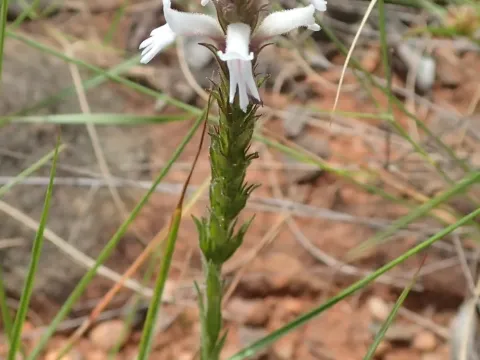
Striga thunbergii
Striga thunbergii
Striga thunbergii is a parasitic plant belonging to the Orobanchaceae family. Unlike traditional crops, it is a significant agricultural pest that functions as a root parasite, attaching itself to the vascular system of host plants, including major cereals like sorghum and maize, thereby severely stunting their growth and reducing yields.
What the section contains
Striga thunbergii
The origin of Striga thunbergii is linked to the African continent, particularly sub-Saharan regions. It has adapted to thrive in diverse environments ranging from tropical savannas to arid agricultural zones, where it leverages the physiological stress of host crops to complete its own life cycle efficiently.
The botanical structure of this plant is specialized for parasitism, featuring haustoria that penetrate the host roots to extract water, nutrients, and photosynthates. Once attached, the parasite often remains hidden underground during its early development, making it difficult to detect until it emerges to flower and produce thousands of minute seeds.
Regarding environmental requirements, the plant prefers warm climates and is particularly aggressive in soils with low fertility or poor agricultural management. The parasite thrives when nitrogen levels are low, as the host plant's inability to grow vigorously creates a favorable window for the parasite to establish its connection.
Effective management strategies for Striga thunbergii involve a combination of biological and technical practices. This includes the implementation of trap crops that trigger seed germination without allowing the parasite to attach, the use of resistant crop varieties, and strict sanitary measures to prevent the spread of its long-lived seeds between fields.