
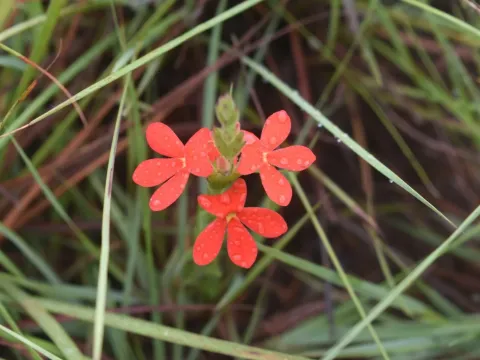
Striga elegans
Striga elegans
Striga elegans is an obligate hemiparasitic plant belonging to the family Orobanchaceae. It is notorious for its destructive impact on cereal crops such as maize, sorghum, and sugarcane across its native range in tropical and southern Africa.
What the section contains
Striga elegans
The plant lacks sufficient chlorophyll to sustain itself independently. It attaches to the host plant's roots through specialized structures called haustoria, effectively diverting essential nutrients, water, and minerals from the crop to the parasite.
The life cycle of Striga elegans is deeply linked to host detection. Seeds will only germinate upon sensing chemical compounds known as strigolactones, which are released by host roots. This evolutionary adaptation ensures the parasite germinates only when a suitable host is in close proximity.
Agronomic control is centered on cultural practices. Crop rotation, specifically utilizing trap crops that stimulate germination without allowing attachment, is a primary strategy. Maintaining high soil fertility and using well-balanced nitrogen fertilization can also suppress the infestation levels.
Environmental requirements for the parasite include warm temperatures and adequate sunlight. It thrives in regions where subsistence farming of susceptible grasses occurs, making it a critical focus for food security initiatives in the affected regions.
The primary threat posed by Striga elegans is the devastating reduction in crop yield. In heavily infested fields, the parasite can cause total crop failure, as it drains the host of its photosynthetic products and water long before the symptoms become visible above ground.
Due to its massive seed production—each plant can generate hundreds of thousands of tiny seeds—Striga is difficult to eradicate once established. These seeds remain viable in the soil for over a decade, creating a persistent "seed bank" that threatens future cycles.
Weed management is further complicated by the fact that the majority of the parasite's development occurs underground. By the time the bright flowers of Striga elegans emerge, the crop has already sustained significant physiological damage.
Biological control strategies involving fungal pathogens or specific insect herbivores are under ongoing research. However, these are not yet widely available as a primary solution for commercial-scale agricultural settings.
The integration of resistant cultivars is considered the most promising long-term solution. Breeding programs are focusing on selecting grain varieties that either discourage parasitic attachment or are more tolerant to the nutrient depletion caused by Striga infestation.