
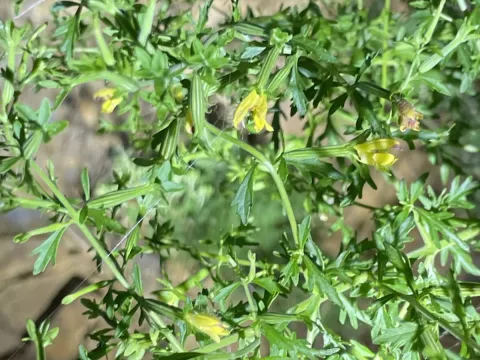
Siphonostegia
Siphonostegia
Siphonostegia is a genus of hemiparasitic plants primarily found in the wild. Consequently, its cultivation is rarely practiced in commercial agriculture and is mainly restricted to botanical research or specialized ecological studies.
What the section contains


Siphonostegia
For research purposes, seeds are sown in the spring once the soil temperature reaches a consistent range of 15-20 degrees Celsius. Pre-sowing stratification is often necessary to break seed dormancy and improve germination uniformity.
Due to the small size of the seeds, they should be sown at a shallow depth. A critical factor in the sowing process is placing the seeds near the roots of potential host plants to ensure the development of haustoria.
Successful establishment depends heavily on the proximity to a suitable host. If the roots of the host plant are not reached by the emerging radicle, the Siphonostegia seedling will typically fail to thrive.
Density management is essential during the initial growth phase. Overcrowding may lead to resource depletion and weaker attachments to host plants, thus affecting the long-term survival of the crop.
Belonging to the Orobanchaceae family, Siphonostegia has specific environmental needs. It prefers well-drained, porous soils that prevent moisture stagnation, as the plant is sensitive to root rot.
Full sun exposure is vital for the plant's development. It is naturally adapted to open grasslands and clearings, requiring significant light intensity to facilitate photosynthesis and energy production.
The climate should be temperate, with distinct seasonal patterns. While it is adapted to natural environmental fluctuations, excessive humidity or prolonged cold spells during the growing season can be detrimental.
Soil nutrient levels are of secondary importance compared to the presence of a viable host plant. The plant derives a significant portion of its minerals and moisture through its parasitic connection to neighboring roots.
Maintenance involves ensuring the health of the host species. Providing a stable ecological environment where the host plant remains healthy is the most critical management task for the cultivator.
Fungal pathogens remain the primary threat to Siphonostegia. High humidity levels often trigger outbreaks of powdery mildew and various forms of stem or root rot that can decimate a population.
Insects, particularly sap-sucking pests like aphids and thrips, pose a constant challenge. These pests weaken the plant, making it less efficient at extracting nutrients from its host and reducing its overall fitness.
The reliance on a host plant is a significant biological vulnerability. Any environmental factor that harms the host species directly impacts the viability of the Siphonostegia colony, creating a domino effect.
Mechanical damage to the roots or stems during field operations can create entry points for soil-borne pathogens, leading to rapid tissue decay and death of the plant.
Integrated pest management strategies are recommended to mitigate these risks, focusing on preventative measures like adequate spacing and maintaining proper soil drainage to avoid damp conditions.