
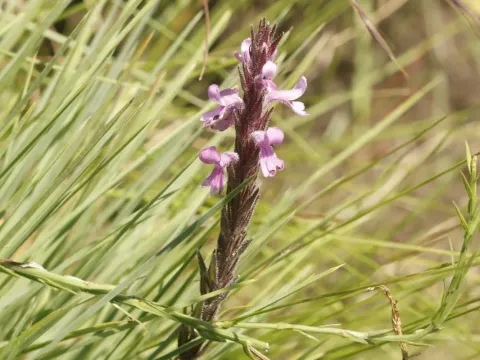
Striga
Striga Lour.
Striga (Striga Lour.), commonly known as witchweed, belongs to the family Orobanchaceae. It is an obligate root parasite and definitely not a crop, but rather one of the most destructive agricultural pests worldwide, primarily affecting cereal crops such as maize, sorghum, and millet.
What the section contains


Striga
The plant has a unique lifecycle: its microscopic seeds remain dormant in the soil for years and germinate only when they detect specific chemical signals, called strigolactones, which are exuded by the roots of a potential host plant.
Striga is native to tropical and subtropical regions, particularly across sub-Saharan Africa. It thrives in soils that are low in nitrogen and have been exhausted by continuous cropping without adequate rotation or soil fertilization strategies.
Climatic requirements for Striga involve warm temperatures and sufficient moisture during the initial stage of germination and attachment to the host root system. The plant possesses a photosynthetic capability, but it relies primarily on the host for water and minerals.
There is no economic value for Striga; it is exclusively considered a quarantine weed. Its presence causes massive yield losses, forcing farmers to abandon fields once they become heavily infested with the persistent seed bank of the parasite.
Management of Striga relies heavily on integrated pest management (IPM) strategies. One of the most effective methods is the use of "trap crops," such as cotton or legumes, which trigger Striga germination but do not support its subsequent attachment and growth.
Biological control agents, including various species of Fusarium fungi, have shown potential in infecting and killing Striga plants before they can emerge above the soil surface and produce new seeds.
Insect pests that target Striga flowers and seed capsules can significantly reduce the parasite's reproductive success. Studies are ongoing to utilize these natural enemies as a sustainable control strategy in heavily infested areas.
Crop management techniques include the application of nitrogen fertilizers, which tend to reduce the host plant's exudation of strigolactones, thereby making it harder for the Striga seeds to germinate in the vicinity of the crop roots.
Sanitation is paramount in preventing the spread of the weed. Ensuring that farming equipment is cleaned before moving between fields and using certified, Striga-free seeds are essential steps in protecting agricultural productivity.