
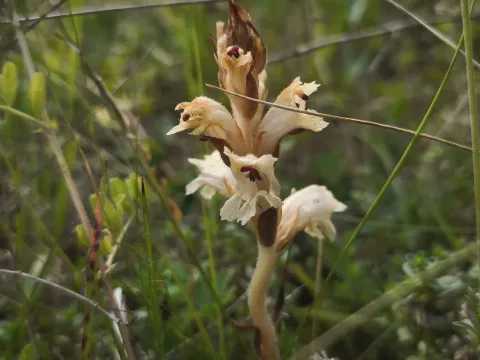
Bedstraw broomrape
Orobanche caryophyllacea
Bedstraw broomrape (Orobanche caryophyllacea) is an obligate root parasitic plant within the Orobanchaceae family. Lacking chlorophyll, this plant is entirely dependent on its host plant for water and nutrients, which it extracts via specialized structures called haustoria.
What the section contains
Bedstraw broomrape
The native range of this species covers parts of Europe, Western Asia, and the Caucasus. It typically inhabits dry, sunny habitats and calcareous soils where its primary hosts, mainly from the Galium genus, are found.
In agricultural settings, this species can pose a threat to various legume crops. The parasite attaches itself to the root system, causing significant physiological stress, stunting the host's growth, and dramatically reducing overall plant vigor.
The plant requires well-drained, nutrient-rich soils with a neutral to alkaline pH to thrive. It is highly adapted to semi-arid and steppe environments where warmth promotes the rapid development of its subterranean life stage before the flower stalk emerges.
The life cycle is triggered by chemical exudates released by the roots of the host plant. These signals stimulate the germination of the broomrape seeds, which can remain dormant in the soil for over a decade, waiting for a suitable host to establish a parasitic connection.
The primary damage caused by bedstraw broomrape is the depletion of the host plant's vital resources. Without proper management, the parasitic infestation can lead to yield losses ranging from moderate reductions to total crop failure in heavily infested fields.
Cultural practices remain the most effective means of control. Crop rotation using non-host species is essential to break the germination cycle and reduce the seed bank in the soil over time. This requires a long-term strategy involving several seasons of non-host cultivation.
Mechanical control is difficult due to the parasite's hidden subterranean existence. However, careful hygiene is necessary to prevent the spread of tiny, dust-like seeds, which are easily transported by farm machinery, wind, or contaminated seed batches.
Research into chemical control often focuses on germination stimulants. By applying these substances to the soil without a host crop present, agronomists aim to induce "suicidal germination" of the broomrape seeds, effectively clearing the field.
Biological control, involving the use of specific natural enemies such as fungi that attack the reproductive structures of the broomrape, is an emerging field that offers sustainable solutions to minimize the impact of this parasitic weed in modern agriculture.