
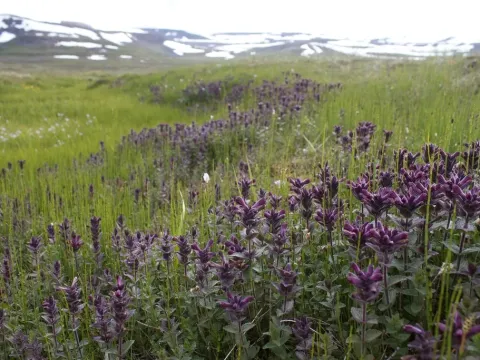
Bartsia
Bartsia
Bartsia is a genus of flowering plants belonging to the Orobanchaceae family. These plants are known for their hemiparasitic nature, meaning they possess chlorophyll and can photosynthesize, yet they also tap into the roots of neighboring plants using haustoria to supplement their intake of water and mineral nutrients.
What the section contains

Bartsia
The distribution of Bartsia is widespread in mountainous regions of Europe, North Africa, Western Asia, and the Andes of South America. They are commonly found in alpine meadows, heathlands, and damp pastures where they form symbiotic-like connections with various grasses and herbaceous species.
These plants thrive in well-drained but consistently moist soils. They generally prefer acidic to neutral soil pH levels. Their life cycle is adapted to cool, temperate climates, and they are particularly resilient to the fluctuating temperatures found at high altitudes.
Bartsia is not cultivated as a crop; rather, it is considered a component of wild botanical communities. In some regions, its presence is used as an indicator of healthy, undisturbed grassland ecosystems that have not been subjected to intensive industrial farming.
Botanically, Bartsia species are characterized by glandular hairs on their stems and leaves. Their inflorescences are typically spike-like, bearing two-lipped flowers that attract specific insect pollinators, ensuring genetic diversity within their often isolated mountain habitats.
The primary threats to Bartsia populations are habitat loss and environmental degradation. The conversion of natural mountain grasslands into intensive agricultural land disrupts the root networks that these hemiparasites rely on for their survival.
Fungal pathogens, particularly those thriving in high humidity, can infect Bartsia, leading to localized die-offs. Rust fungi and various leaf spots are the most common pathogens observed in wild populations, though they rarely result in total population collapse.
Overgrazing by livestock represents another significant threat, as it reduces the host plant diversity available for the Bartsia to parasitize. Without healthy host plants, Bartsia seedlings often fail to establish and reproduce effectively.
Climate change and shifts in alpine precipitation patterns pose a long-term risk. Altered moisture levels can disrupt the synchronized life cycles of the Bartsia and its associated host plants, potentially leading to local extinction of specialized species.
Invasive species also compete for space and resources, particularly in lower-altitude areas. This competition can overshadow Bartsia, restricting its growth and preventing the successful dispersal of its seeds across the landscape.