
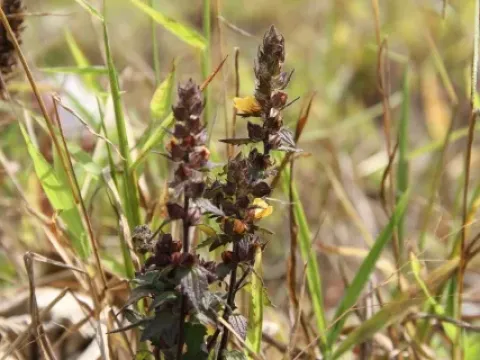
Alectra senegalensis
Alectra senegalensis
Alectra senegalensis is not a cultivated crop but an aggressive root hemiparasite that infests cereal and legume fields in tropical regions.
What the section contains
Alectra senegalensis
The germination of its seeds is strictly dependent on the presence of chemical stimulants known as strigolactones, released by host plant roots.
These minute seeds can persist in the soil for several years, forming a dormant seed bank that makes eradication extremely difficult for farmers.
The emergence of the parasite usually occurs shortly after the emergence of the crop, as the parasite synchronizes its life cycle with the host.
Agricultural management relies on preventing the spread through clean seed certification and strict quarantine measures in infected agricultural areas.
This species is native to sub-Saharan Africa, thriving in environments with seasonal rainfall and warm tropical temperatures.
It prefers well-drained soils where host plants establish deep root systems, facilitating the parasitic connection required for survival.
Environmental conditions that favor the rapid growth of legumes or grasses also support the physiological demands of Alectra.
The plant requires high light intensity for its photosynthetic activities, although it derives water and minerals from the host through its haustoria.
Soil moisture levels are essential during the germination phase to ensure the radicle can successfully attach to the host root.
Alectra senegalensis causes severe yield losses by depleting nutrients and water from vital crops like cowpea and sorghum.
The primary control strategy involves crop rotation using trap crops that induce germination without supporting the parasite's development.
Integrated weed management also suggests the removal of the parasite by hand-weeding before the onset of flowering and seed maturation.
Resistance breeding is a critical area of focus, aiming to develop crop varieties that do not trigger the parasite's germination cycle.
While biological control agents are researched, chemical herbicides are often difficult to apply without damaging the infested host crop.