
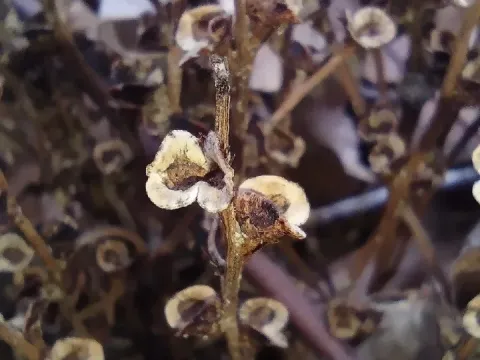
Beechdrops
Epifagus
Beechdrops (Epifagus virginiana) is a specialized root parasite belonging to the Orobanchaceae family. It is not an agricultural crop but a fascinating botanical specimen found in wild forest habitats.
What the section contains

Beechdrops
The plant lacks chlorophyll entirely, rendering it incapable of photosynthesis. It survives by tapping into the root system of the American beech tree (Fagus grandifolia) to acquire nutrients and water.
Native to North America, its distribution is strictly determined by the presence of mature beech forests. It thrives in shaded, moist environments that support the health of the host tree.
There is no commercial cultivation of this species. Its life cycle is inextricably linked to the host's physiological state, making it impossible to grow in traditional agricultural settings.
The plant grows as a cluster of branching stems that emerge from the soil near the base of the host tree, relying on subterranean haustoria to bridge the connection with the host's roots.
The primary threat to the existence of beechdrops is habitat loss. Deforestation and the clearing of mature American beech stands lead to the total disappearance of this dependent species.
Beechdrops are rarely affected by typical agricultural pests due to their specialized parasitic nature and unique chemical profile which acts as a natural deterrent to many herbivores.
Pathogenic fungi that impact the host tree's roots present a significant risk. If the host tree weakens or dies, the beechdrops plant loses its sole source of life support.
Changes in soil moisture and forest floor composition due to environmental changes can also limit the ability of the plant to establish successful connections with new host roots.
As a non-agricultural plant, it does not face threats from standard farm management practices, but it is highly vulnerable to any land-use changes that degrade forest ecosystems.