
Bloody broomrape
Orobanche sanguinea
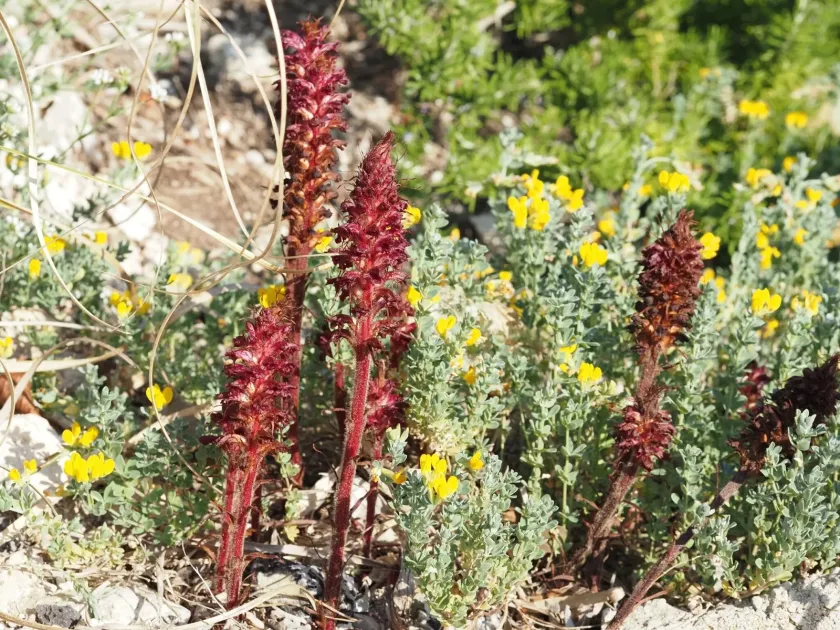
Description
Growing requirements
Bloody broomrape (Orobanche sanguinea) belongs to the Orobanchaceae family. It is a specialized root parasite that lacks chlorophyll and is entirely dependent on its host plant for water, nutrients, and carbon compounds.
The species is found in specific climates with warm soil conditions suitable for seed germination. The lifecycle is strictly triggered by chemical exudates released from the roots of susceptible host species, which signal the germination of broomrape seeds.
Botanically, it features a stout, erect stem covered in scale-like leaves. The inflorescence is a dense spike with vibrant, blood-red to deep purple flowers, which serve as the primary distinguishing morphological characteristic of the species.
The parasitic connection is established via an organ known as a haustorium. Once the seedling reaches the root of the host, it penetrates the epidermis and connects to the host's vascular system to siphon off essential resources.
Broomrape seeds are microscopic and produced in massive quantities. Their ability to remain dormant in the soil for extended periods, waiting for the presence of a host, makes them a persistent challenge for sustainable agriculture.
Main diseases and pests
This parasitic plant represents a significant threat to agricultural productivity. By hijacking the vascular flow of the host plant, it severely stunts growth, reduces biomass accumulation, and can cause total crop failure in heavily infested fields.
While the broomrape itself is not subject to typical crop diseases, it significantly alters the physiological status of the host, often leading to secondary infections. The weakened host becomes highly susceptible to various fungal and bacterial pathogens.
Natural enemies of Orobanche species, such as specific species of Phytomyza flies, can provide some level of biological control. However, these natural regulators are rarely sufficient to prevent economic damage in intensive farming.
Control strategies involve a combination of chemical, cultural, and genetic methods. Crop rotation with non-host species is essential to deplete the seed bank in the soil over several years.
Genetic resistance is the most effective long-term approach. Breeding programs focused on developing host cultivars that prevent the attachment or subsequent development of the parasite have become the cornerstone of management.