
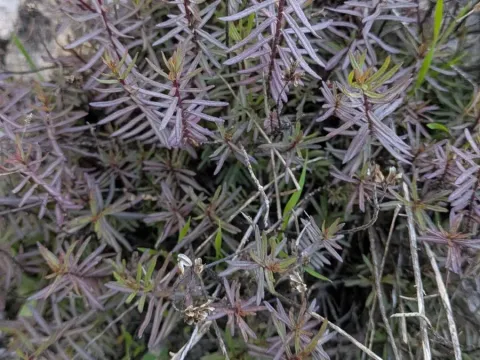
Red bartsia
Odontites
Red bartsia is an annual herbaceous plant whose life cycle is closely synchronized with the growth of host plants. Seeds typically germinate in spring, responding to rising temperatures and soil moisture levels.
What the section contains
 Corsican Odontites
Odontites corsica
Odontites aucheri
Odontites aucheri
Odontites cebennensis
Odontites cebennensis
Corsican Odontites
Odontites corsica
Odontites aucheri
Odontites aucheri
Odontites cebennensis
Odontites cebennensis
 Odontites glutinosa
Odontites glutinosa
Odontites glutinosa
 Odontites holliana
Odontites holliana
Odontites holliana
 Odontites jaubertiana
Odontites jaubertiana
Odontites jaubertiana
 Odontites kaliformis
Odontites kaliformis
Odontites kaliformis
 Odontites linkii
Odontites linkii
Odontites linkii
 Odontites litoralis
Odontites lutea
Odontites lutea
Odontites litoralis
Odontites litoralis
Odontites lutea
Odontites lutea
 Odontites viscosa
Odontites viscosa
Odontites viscosa
 Pyrenean eyebright
Odontites pyrenaea
Pyrenean eyebright
Odontites pyrenaea
 Red bartsia
Odontites vernus
Red bartsia
Odontites vernus
 Red bartsia
Odontites vulgaris
Red bartsia
Odontites vulgaris
Red bartsia
The plant spends the winter in the soil bank as seeds, ensuring that emergence occurs simultaneously with the vegetation of its primary nutrient sources. Proper timing of soil cultivation is essential for managing its population in fields.
The main growth phase occurs between May and August. During this time, the plant develops its specialized root structures, known as haustoria, which penetrate the roots of host plants to extract water and minerals.
For agricultural control, it is critical to implement mechanical or chemical interventions before the plant reaches the flowering stage. Late control measures often lead to the rapid dissemination of thousands of small seeds.
The ecological niche of the plant is determined by the availability of suitable hosts, which dictates the distribution patterns of red bartsia across different landscapes.
Odontites belongs to the family Orobanchaceae. Unlike typical parasitic plants, members of this genus are hemiparasites, meaning they possess green leaves and are capable of photosynthesis, though they supplement their diet via hosts.
These plants thrive in open, well-lit habitats, including meadows, roadsides, and fallow fields. They are highly adaptable to various soil types, ranging from sandy to heavier clay compositions, provided that water is sufficient.
The climate requirement is primarily focused on temperate zones where moderate rainfall supports the plant’s initial growth stages. The plant is resilient to cold, though its activity is distinctly seasonal.
Agrotechnical management involves crop rotation, which limits the access of Odontites to its preferred host plants. Regular tillage practices are effective in destroying young seedlings before they establish root connections.
Soil management strategies should include ensuring high competitiveness of the primary crop, which can naturally suppress the establishment of hemiparasitic weeds through shading and root competition.
As a wild plant often found in grasslands, the primary threats to Odontites include soil-borne fungal pathogens that target the delicate root system during the development of haustoria.
There is limited research on specific pests for the Odontites genus, as it is generally considered a weed rather than a commercial crop. However, general phytophagous insects may cause damage to foliage.
Environmental management, such as the maintenance of pasture diversity, helps in keeping the population of Odontites at a stable, non-invasive level within the natural ecosystem.
Herbicidal application is the standard approach in intensive farming systems to eliminate this weed, as it can compete with forage crops by diverting essential water and nutrients away from the crop.
In conclusion, controlling this plant requires a multi-faceted approach combining chemical suppression, tactical tillage, and the strategic selection of non-host crops to starve the hemiparasite.