
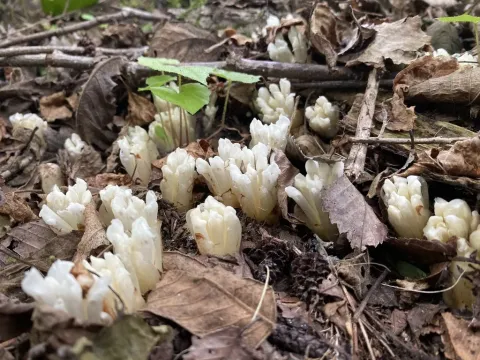
Phacellanthus
Phacellanthus
Phacellanthus is a genus of parasitic, non-photosynthetic plants belonging to the Orobanchaceae family. Being holoparasitic, these plants lack chlorophyll and are entirely reliant on a host plant for the supply of nutrients, water, and essential organic compounds.
What the section contains

Phacellanthus
The origin and distribution of this genus are concentrated in the temperate and subtropical forests of Eastern Asia. It is commonly found in regions across Russia's Far East, China, Japan, and the Korean Peninsula, typically growing in moist, shady forest floors.
Botanically, the plant is characterized by a fleshy, stem-like structure covered in small scale-like leaves. Its reproductive strategy involves specialized underground development, with flowers emerging only when environmental conditions are optimal for seed production.
Requirements for the plant include a specific host tree species, as the germination of seeds depends on chemical signals released by the host's roots. Furthermore, a high level of soil humidity and organic-rich forest soil are vital for the successful establishment of the parasite.
In terms of хозяйственное (economic) utilization, Phacellanthus is not cultivated as a crop. Its significance lies primarily within academic research regarding plant-parasite interactions and its role as a biological indicator for the health and diversity of ancient forest ecosystems.
The primary threat to Phacellanthus is the degradation of its native forest habitat caused by deforestation and industrial activities.
Soil compaction in forest areas disrupts the delicate root connection between the parasite and its specific host plant species.
Prolonged drought periods significantly reduce the viability of seeds, which are highly adapted to moisture-rich conditions.
Changes in forest canopy density can alter microclimate conditions, making the environment unsuitable for Phacellanthus development.
Invasive plant species can outcompete the host trees, indirectly leading to the local extinction of the parasitic populations.