
Odontites litoralis
Odontites litoralis
Description
Growing requirements
Odontites litoralis is a hemiparasitic annual plant belonging to the family Orobanchaceae. It is capable of photosynthesis but often derives additional water and minerals by attaching to the roots of host plants via specialized organs called haustoria.
The species is primarily found in coastal habitats, such as salt marshes and sandy seashores across Northern and Central Europe. Its distribution is heavily dictated by soil salinity levels, where it thrives as part of specialized halophytic vegetation.
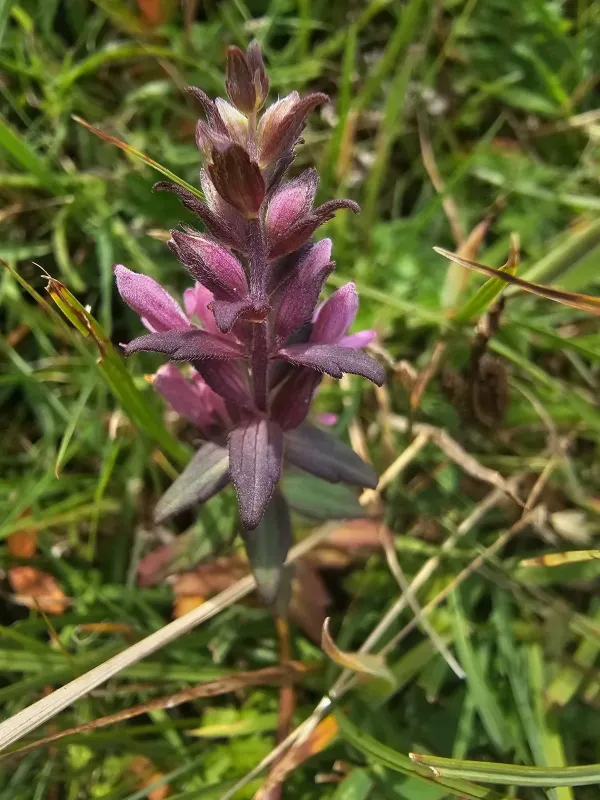
Botanically, the plant features erect, often branched stems with lanceolate leaves and small, dense spikes of flowers. The lifecycle is adapted to the seasonality of maritime climates, allowing it to complete its reproductive stage during the summer months.
Regarding cultivation requirements, the species demands high solar radiation and soils with specific chemical properties. It is not traditionally cultivated as a crop but serves as an important subject in plant ecology and salinity research.
Agricultural management of such a species in experimental settings requires an understanding of host-parasite interactions. Maintaining a balance in the ecosystem is crucial to ensure that the plant does not negatively impact the surrounding flora during botanical studies.
Main diseases and pests
The primary threats to Odontites litoralis include fungal pathogens that exploit the plant's moisture-rich environment. Rust fungi and various forms of leaf spot can significantly inhibit the growth and seed set of the plant during unfavorable weather conditions.
Pest activity, particularly from specialized sucking insects and larvae, can pose a risk to the vegetative development. Integrated pest management strategies are often implemented when studying this species to ensure the health of the specimens under observation.