
Rhinanthus antiquus
Rhinanthus antiquus
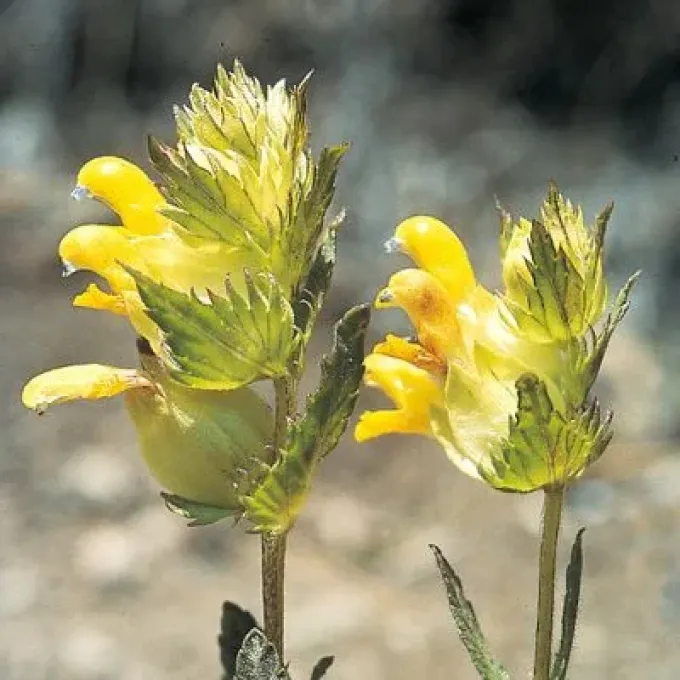
Description
Growing requirements
Rhinanthus antiquus belongs to the family Orobanchaceae. It is an annual herbaceous plant that functions as a hemiparasite, meaning it derives part of its nutrients by attaching its roots to those of host plants, predominantly grasses.
This species naturally inhabits meadows and open grasslands. It thrives in temperate environments where it can access sufficient sunlight and humidity, which are essential for its vigorous growth and the success of its parasitic strategy.
The plant demonstrates adaptability to various soil types, preferring well-drained loams or sandy soils. However, its survival is heavily dependent on the proximity of suitable host species, as it relies on them for water and mineral uptake.
Climate requirements for this plant are typical of temperate regions. It is highly resistant to cold weather in early spring, allowing it to germinate and establish its connections to host roots before other species become too dominant.
In terms of agricultural management, Rhinanthus antiquus is frequently viewed as a weed in hay meadows. Its presence reduces the overall nutrient quality and biomass of the forage crop because it depletes the host plants of resources, necessitating control measures in managed fields.
Main diseases and pests
The most effective threat to the proliferation of this species is early mowing, which should be performed before the plant sets seeds, effectively disrupting its reproductive cycle.
Like many species in its family, it can be susceptible to powdery mildew infections during particularly damp and humid seasons, which may hinder its overall development and vigor.
Certain insect larvae, such as those of various moths, may target the seed capsules of the plant, acting as a natural check on its seed dispersal capabilities.
Competition from aggressive, nutrient-demanding vegetation can also limit the establishment of Rhinanthus antiquus if the host density is not sufficient to support the parasite.
In intensive farming, chemical control using herbicides targeting broad-leaved weeds is occasionally used to minimize the impact of the parasite on pasture productivity.