
Red bartsia
Odontites vulgaris
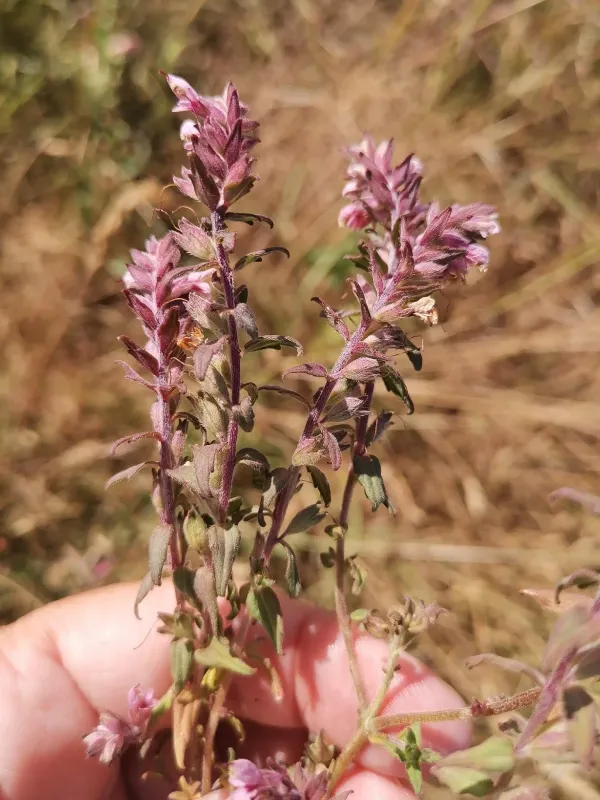
Description
Sowing dates
Red bartsia (Odontites vulgaris) is an annual herbaceous plant belonging to the Orobanchaceae family. While not an agricultural crop, it is a common inhabitant of meadows and grasslands that interacts with various plant species, particularly grasses.
As a hemiparasite, its development is dependent on establishing root connections with a host plant via haustoria. Without these attachments, the plant's growth is severely inhibited, making it a specialized component of its ecosystem.
The life cycle begins with the germination of seeds, which typically requires a period of dormancy and specific moisture conditions in the spring. Once established, the plant grows rapidly, utilizing resources stolen from its host to fuel its development.
Flowering occurs throughout the summer months, producing characteristic spikes of small flowers. These flowers are highly attractive to pollinators, ensuring cross-pollination and subsequent seed production.
Seed dispersal is facilitated by wind and water, as well as human activities such as hay harvesting. Managing the timing of mowing is critical to prevent the maturation of seeds and to reduce the spread of the species in productive agricultural areas.
Growing requirements
Red bartsia thrives in open, sunny habitats with moderate soil moisture. It is frequently observed in floodplains, wet meadows, and along the margins of drainage ditches where the soil remains sufficiently damp throughout the growing season.
The species shows a preference for nutrient-rich but not excessively saline soils. It is well-adapted to the temperate climate conditions of Europe and Northern Asia, demonstrating resilience to typical seasonal temperature fluctuations.
Competition is a significant factor in its survival. In dense, high-yielding swards, Red bartsia may struggle to compete for resources, which is why it often appears in patches where the ground cover is slightly degraded or open.
Soil management plays a vital role in its presence on agricultural land. Improving soil structure and promoting the growth of vigorous competitive grasses can significantly limit the success of Red bartsia populations.
Regular maintenance of drainage systems and balanced fertilization programs help sustain the vigor of target forage crops, creating an environment where hemiparasitic weeds have limited opportunities to establish root connections.
Main diseases and pests
The primary concern regarding Red bartsia in an agricultural context is its potential to reduce the biomass of forage grasses. By siphoning off water and nutrients, it reduces the overall productivity of the grazing land.
The plant is susceptible to various fungal pathogens, particularly under conditions of high humidity or poor air circulation. Powdery mildew and other leaf-spot diseases can significantly impact the health and vitality of a population.
Insect pests, including aphids and various leaf-feeding insects, can damage the plant structures, potentially reducing its reproductive success. These natural factors often keep populations of Red bartsia in check within established, healthy ecosystems.
Effective control strategies focus on integrated management, where cultural practices like overseeding and proper grazing management are used to improve the competitive capacity of desired plant species.
Chemical control is rarely a targeted option and is usually avoided due to the risk of damaging non-target beneficial species. Preventive measures and long-term ecological balance remain the most sustainable approaches to managing Red bartsia in meadows.