
Odontites viscosa
Odontites viscosa
Description
Growing requirements
Odontites viscosa is a plant species belonging to the Orobanchaceae family. It is recognized primarily as a hemiparasitic plant, meaning it synthesizes some of its own nutrients through photosynthesis but also relies on host plants for water and minerals.
The origin of this species is centered around the Mediterranean region, where it thrives in rugged environments. It is commonly found in dry, stony, or rocky soils, demonstrating a high tolerance for poor-quality agricultural lands.
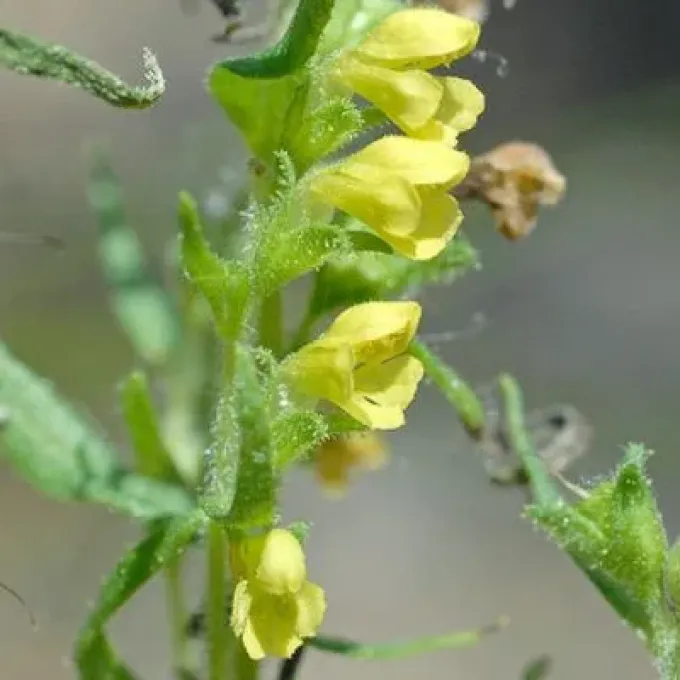
Botany-wise, the plant is distinguished by glandular hairs that give it a sticky texture, helping to reduce transpiration under high-temperature conditions. It typically grows as a branching herb with vibrant inflorescences.
Regarding climatic needs, Odontites viscosa is a true xerophyte. It demands significant solar radiation and excellent drainage, failing rapidly in heavy, waterlogged, or overly humid environments that encourage root rot.
While not a staple industrial crop, it serves an important role in ecological restoration and as a subject of botanical study. Its ability to interact with surrounding vegetation makes it a unique candidate for specific land management research.
Main diseases and pests
Major threats to this species include fungal pathogens which become highly active during damp, cool weather. Poor ventilation is the primary trigger for outbreaks of mold and mildew on the foliage.
Insects like aphids represent a consistent threat, as they can weaken the plant by feeding on the sap, particularly during the early stages of the flowering cycle when nutrients are mobile.
Soil-borne pests, including various larvae, can cause significant damage to the root system, potentially breaking the crucial connection between the hemiparasite and its host plant.
Competition from aggressive, fast-growing weeds can often result in the displacement of Odontites viscosa in early development, as the plant grows relatively slowly at the seedling stage.
Maintaining a balanced ecosystem with adequate soil drainage and minimizing nitrogen-heavy fertilizers is essential to preserve the health and natural resilience of the species.