
Odontites kaliformis
Odontites kaliformis
Description
Growing requirements
Odontites kaliformis is a unique herbaceous plant belonging to the Orobanchaceae family. Historically placed within Scrophulariaceae, this plant is known for its hemiparasitic nature, meaning it performs photosynthesis but also derives nutrients from the roots of host plants.
The species is strictly associated with saline environments. It is naturally found in salt marshes, salt flats, and brackish meadows. This ability to withstand high salinity levels in the soil solution makes it a classic halophyte that thrives where other plants struggle.
Its natural range covers arid and semi-arid regions. It is well-adapted to high temperatures and water scarcity. The plant requires significant sunlight to complete its lifecycle, and its distribution is often limited by the availability of suitable host species for root attachment.
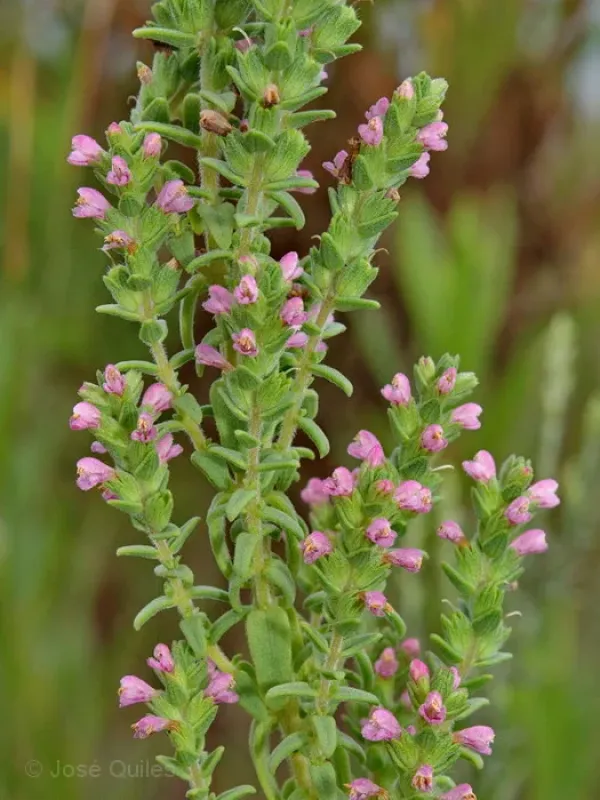
The botanical structure of Odontites kaliformis features a branched, upright stem with linear leaves, which helps to maintain internal water balance. The plant usually reaches a moderate height, depending on the productivity of the soil and the success of its parasitic connections.
Flowering occurs in the summer months, producing spikes of small flowers. The reproductive strategy relies on the production of numerous tiny seeds that can be dispersed by wind, allowing the plant to colonize new saline patches effectively during favorable seasons.
Main diseases and pests
Threats to Odontites kaliformis are primarily linked to the conversion of natural saline habitats into agricultural land or urban areas. Land reclamation, specifically soil leaching to remove salt, destroys the specific habitat the plant requires for survival.
In terms of pests, the plant is susceptible to sap-feeding insects such as aphids. These insects can cluster on the stems and developing flower spikes, causing stunted growth and reducing the plant's ability to produce viable seeds.
Fungal diseases are a potential threat, especially under conditions of high humidity. Pathogens can infect the stem base or foliage, leading to necrosis. These infections are more severe when the plant is already weakened by environmental stress or insect damage.
Herbicides used in agricultural practices are generally lethal to this species. Because it acts as a broad-leaved plant, standard chemical weeding programs usually eliminate Odontites kaliformis from crop fields and buffer zones.
Despite these threats, the plant remains resilient in its protected wild habitats. Conservation of salt marsh ecosystems is the primary method for maintaining the presence of this species, as its niche is highly specialized and not easily replaceable by other vegetation.