
Pyrenean eyebright
Odontites pyrenaea
Description
Growing requirements
Pyrenean eyebright (Odontites pyrenaea) is a member of the Orobanchaceae family, recognized as a specialized herbaceous hemiparasitic plant. It naturally attaches to the roots of neighboring plants, extracting water and nutrients through specialized organs known as haustoria.
The native range of this species primarily includes the mountainous regions of Southwestern Europe. It is well-adapted to cooler climates and high altitude conditions, preferring environments with excellent light exposure and sufficient air circulation.
Soil requirements for optimal growth involve well-drained, nutrient-poor to moderately fertile substrates. The plant struggles in heavy, waterlogged soils where root rot can easily develop, particularly given its sensitive hemiparasitic nature.
In an agricultural context, the successful cultivation of Pyrenean eyebright necessitates a compatible host plant. Without the host, the seedling will fail to establish itself properly, highlighting the complex dependency inherent in this species.
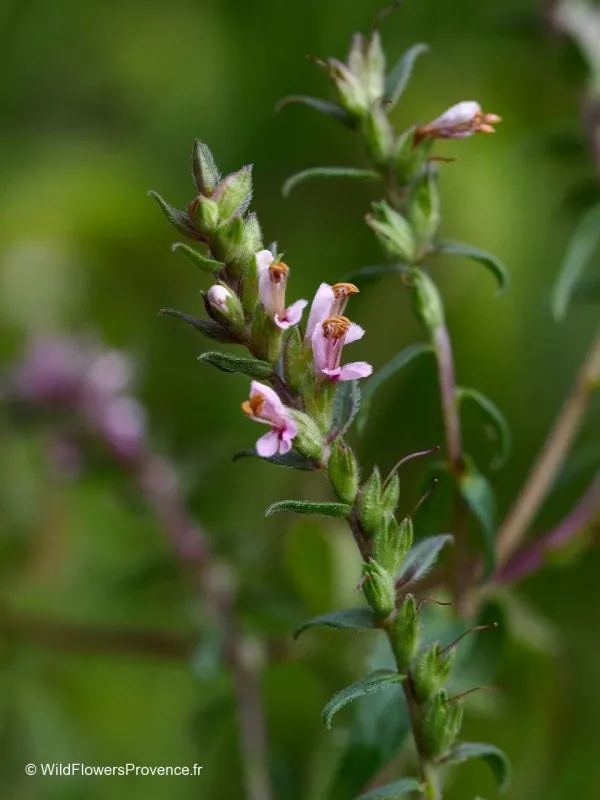
Botanically, it presents as an erect, pubescent plant with linear leaves and dense, spike-like inflorescences. The flowers are typically deep pink to purple, providing a vibrant appearance that contributes to the local biodiversity in its native mountain ranges.
Main diseases and pests
The primary threats to the crop include fungal pathogens such as root rot and powdery mildew. These diseases are usually triggered by high humidity, poor soil drainage, or stagnant air within the planting rows.
Pests such as aphids pose a significant risk, particularly during the vegetative stage. Aphids feed on the sap of the succulent stems, which can severely weaken the plant and reduce its ability to maintain its host-parasite relationship.
Management of these threats requires a prophylactic approach, focusing on site selection and ensuring proper plant spacing. Overcrowding should be strictly avoided to minimize the risk of rapid disease transmission between individual plants.
The health of the host plant is directly linked to the survival of Pyrenean eyebright. If the host suffers from nutrient deficiencies or pest attacks, the hemiparasite will inevitably face premature senescence, leading to poor crop output.
Integrated pest management (IPM) strategies, including regular scouting and the use of botanical insecticides, are recommended when necessary. Maintaining a clean and balanced environment is the best defense against major crop failure.