
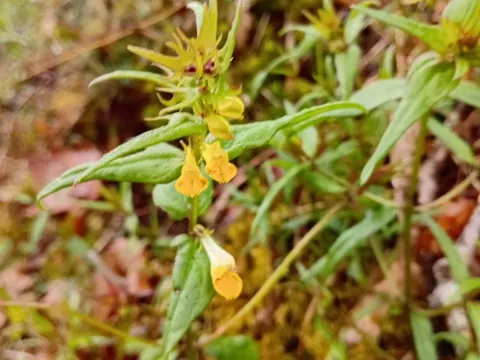
Common cow-wheat
Melampyrum pratense
Common cow-wheat (Melampyrum pratense) is an annual herbaceous plant belonging to the Orobanchaceae family. It is recognized primarily as a hemiparasitic species that interacts with the root systems of various host plants to supplement its nutrient uptake.
What the section contains
Common cow-wheat
The plant is native to temperate regions across Europe and parts of Asia. It thrives in diverse habitats including open woodlands, forest edges, and grasslands. Its distribution is closely linked to the presence of suitable host species, such as specific grasses and shrubs.
Botanically, it features slender stems reaching up to 50 centimeters in height with opposite, narrow leaves. The yellow, tubular flowers are characteristic of the species, often attracting pollinating insects, which is vital for its reproductive cycle in the wild.
Regarding site requirements, common cow-wheat prefers moist but well-drained soils. It exhibits a high sensitivity to soil acidity and rarely colonizes extremely degraded or waterlogged sites, preferring nutrient-balanced, semi-shaded to sunny environments.
In terms of agricultural use, this plant is generally considered a nuisance in forage production. Because it contains compounds that can be toxic to livestock, its presence in large quantities within harvested hay significantly decreases the quality and safety of the fodder.
Common cow-wheat is susceptible to various fungal pathogens such as powdery mildew, which can significantly damage its leaf tissue during humid seasons. These infections often reduce the plant's ability to photosynthesize effectively, limiting its growth.
Insects like aphids are common pests that feed on the sap of the plant. While the plant has chemical defenses like iridoid glycosides, intense aphid infestations can still weaken the plant's vigor and reduce its overall seed production for the following year.
Mechanical damage caused by machinery or heavy livestock grazing is a major threat to its survival. As a hemiparasite, the destruction of the host plant or the physical disruption of the roots often leads to the death of the cow-wheat specimen.
Changes in soil fertility, particularly the application of high-nitrogen fertilizers, lead to the rapid decline of common cow-wheat populations. Such practices promote the growth of vigorous grass species, which outcompete the hemiparasite for space and resources.
Management of the species is rarely conducted via herbicides. Instead, standard agricultural improvement practices—such as liming acidic soils and overseeding with productive forage grasses—are the most effective methods to reduce its frequency in agricultural landscapes.