
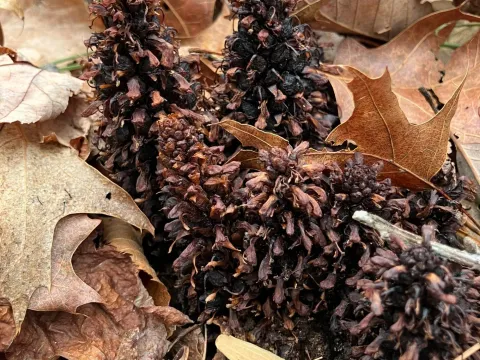
Conopholis
Conopholis
Conopholis is a genus of parasitic plants belonging to the broomrape family, Orobanchaceae. As a holoparasite, it lacks chlorophyll and is completely incapable of performing photosynthesis, relying entirely on a host plant.
What the section contains

Conopholis
The genus is native to North America and is primarily found in deciduous forest ecosystems. It typically parasitizes the roots of trees, with oaks (genus Quercus) serving as the most common host species.
For growth and development, Conopholis requires specific forest conditions, including deep leaf litter and the presence of established, healthy host tree roots that can provide the necessary nutrients.
The morphology of the plant is quite striking: it features a fleshy, unbranched, or sparingly branched stem covered in scale-like leaves. The inflorescence resembles a maize cob, which has led to its common name in some regions.
It is important to note that Conopholis is not an agricultural crop. It holds no commercial or nutritional value for humans and serves strictly as an ecological component within forest biology.
The primary threat to Conopholis populations is the destruction of native forest habitats. Loss of host trees results in the immediate loss of the parasite's life support system.
Pathogenic fungi represent a significant risk to Conopholis, especially under conditions of excessive soil moisture, which can cause the soft tissue of the plant to rot rapidly.
Various insect larvae are known to feed on the reproductive parts of the plant, potentially limiting the spread of seeds and the regeneration of new parasitic colonies.
Environmental stressors that negatively impact the health of the host tree, such as root rot or droughts, indirectly jeopardize the stability and survival of the Conopholis population.
Because Conopholis is not an agricultural plant, there are no established pest control or disease management protocols designed for its maintenance or cultivation.