
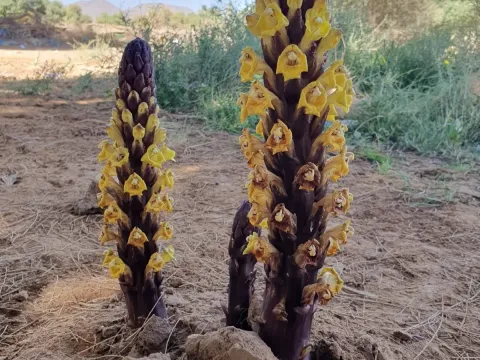
Cistanche
Cistanche
Cistanche is a genus of parasitic plants belonging to the Orobanchaceae family that lack chlorophyll and rely entirely on host plants for nutrients. Propagation is primarily achieved by sowing seeds into the soil near the root system of host plants, typically species of Haloxylon (saxaul) or Tamarix, which are common in arid ecosystems.
What the section contains


Cistanche
The sowing season is strictly dictated by the biological cycle of the host plant and the arrival of optimal soil temperatures. Cistanche seeds remain viable in the soil for several years, waiting for the chemical cues released by the host roots to trigger germination and subsequent attachment.
Precision in sowing depth is paramount, as the seeds must be placed within the rhizosphere of the saxaul. Advanced agricultural practices involve specialized seeding equipment to ensure the seeds are positioned correctly to facilitate the parasitic attachment, which is the most critical stage of the lifecycle.
Adequate moisture levels in the soil during the germination phase are essential for successful colonization. Once the connection to the host plant is established, the Cistanche plant begins to extract carbohydrates and nutrients, allowing it to develop its characteristic succulent fleshy stems.
In large-scale commercial cultivation, seeding is often integrated into desert reclamation projects. This approach not only generates high-value medicinal products but also contributes to the stabilization of sandy soils and the restoration of degraded arid landscapes.
Cistanche has evolved to thrive in harsh desert and semi-desert environments, demanding high temperatures and intense solar radiation. As it is a holoparasite, it does not require direct sunlight for photosynthesis, yet it depends entirely on the robust health and metabolic activity of its host plant.
The soil must be sandy or loamy with excellent drainage properties. Heavy clay soils are unsuitable because they inhibit the growth of the host plant's root system, which acts as the nutrient delivery vehicle for the parasite, thereby severely limiting potential yields.
While the plant is drought-tolerant, maintaining a consistent water regime through localized irrigation in the host's root zone can significantly enhance growth rates. Balancing water availability is crucial, as excessive moisture can lead to root rot in the host and negatively impact the parasite.
Good agrotechnical management requires keeping the saxaul population vigorous. Any decline in the health of the host plant will result in a decrease in the biomass of the Cistanche, making host protection and health monitoring a central task for the agronomist.
Environmental conditions also require careful management to prevent soil erosion, which could expose the underground parts of the plant. Maintaining vegetation cover or using windbreaks can help stabilize the sand and protect the delicate developmental stages of the Cistanche.
Yield in Cistanche production is primarily measured by the mass of the succulent stems harvested. Productivity is directly correlated with the age, vitality, and density of the host plant population, as well as the successful infestation rates achieved during the initial sowing phase.
Typically, the first harvest can be obtained three to four years after successful inoculation. Once established, the plantation can remain productive for several years, provided that the harvesting techniques are sustainable and do not permanently injure the host plant's root system.
Yield optimization involves careful spacing of hosts and monitoring of parasitic development. Innovative breeding programs are currently working to select strains with higher concentrations of active medicinal compounds, such as echinacoside and acteoside, which are highly valued in the global pharmaceutical market.
Regular monitoring of plant growth allows producers to estimate yields accurately and plan logistics for harvesting and processing. High-quality output is characterized by consistent stem size and optimal chemical composition, meeting the stringent standards required for medical use.
Sustainable harvesting, which involves selective collection, ensures that the plantation maintains its productive capacity over the long term. This approach maximizes the economic output while preserving the natural balance of the arid ecosystem where the Cistanche is grown.
Natural threats to Cistanche include extreme weather events such as intense sandstorms that can shift soil layers, potentially burying the plant too deep or exposing it to desiccation. Fluctuating climate patterns can also interfere with the synchronization of the host-parasite relationship.
Fungal pathogens represent a significant risk, particularly when high humidity occurs in the root zone, leading to stem rot and tissue decay. Such infections can quickly spread through a plantation, necessitating prompt removal of affected areas and biological disease control measures.
Pests, including various insect larvae that feed on the succulent stems, can degrade the quality of the harvested product. Integrated pest management strategies, focusing on biological controls that are non-toxic to the desert ecosystem, are preferred to maintain organic standards.
Anthropogenic threats, such as illegal over-harvesting from wild populations, pose a major risk to genetic diversity and natural regeneration. Cultivated plantations play a vital role in reducing this pressure by providing a stable and legal supply of medicinal material.
Small mammals and rodents may also cause localized damage by consuming the nutritious, moisture-rich shoots. Protective measures, including physical barriers around the host zone, are often implemented to safeguard the crop during its vulnerable spring growth period.
The harvest phase occurs when the Cistanche stems are at their peak for medicinal potency, typically during the active flowering period. Identifying the exact timing is critical, as the concentration of secondary metabolites can change rapidly during the developmental cycle.
Manual harvesting is the standard procedure. Workers carefully dig around the base of the stem and cut it just below the sand surface, ensuring minimal impact on the host root, which is essential for the continued vitality and future productivity of the plant.
Post-harvest handling is time-sensitive. The stems must be cleaned of sand and debris immediately to prevent contamination. This initial cleaning stage is essential for maintaining the quality and appearance of the raw material before it moves to the drying phase.
Drying is performed using methods that preserve the integrity of the active ingredients, often involving controlled temperature settings to ensure a stable product. Proper drying prevents fermentation and enzymatic degradation, which could otherwise lower the therapeutic value of the herb.
Final storage involves placing the dried Cistanche in moisture-proof packaging in a cool, dry environment. This protects the product from environmental degradation, ensuring it retains its pharmacological efficacy until it is processed into final medicines or health supplements.