
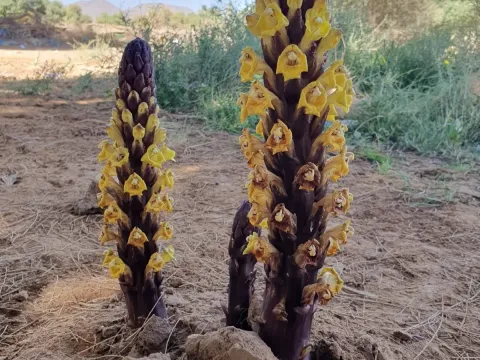
Cistanche
Cistanche Hoffmanns.& Link
Sowing Cistanche involves the artificial inoculation of the roots of host plants, such as species of Haloxylon or Tamarix. Seeds are sown in close proximity to the host's root system at a depth of 30 to 50 centimeters.
What the section contains
Cistanche
The most favorable time for inoculation is during the spring when the soil warms up, or in the early autumn. The germination of Cistanche seeds is strictly dependent on chemical secretions from the host plant's roots.
On a commercial scale, plantations are established in areas where desert shrubs naturally grow. It is essential to maintain proper spacing and planting density to avoid depleting the host plant's vitality.
Site preparation requires minimal soil disturbance to maintain the integrity of the host root system. Sowing is typically performed manually or with specialized injectors that deliver seeds directly to the host's feeding zone.
Regular monitoring of seed establishment is required during the first year. Given its biological nature, Cistanche shoots usually appear above the soil surface only in the second or third year after inoculation.
Cistanche is a parasitic plant of the Orobanchaceae family, which has specific environmental requirements. It is adapted to extreme desert conditions, requiring high-intensity sunlight and low levels of humidity.
Optimal soils for cultivation are sandy and loose, with good aeration and low organic content. The crop is highly sensitive to waterlogging, which can easily lead to the rotting of its fleshy stems.
The temperature range in its natural habitat varies from extremely high summer temperatures to freezing winter cold. The species has evolved unique mechanisms to protect itself from dehydration in arid environments.
The most critical factor for success is the presence of a healthy host plant. The symbiotic relationship between the parasite and the host determines the biomass accumulation and the concentration of active compounds.
Agricultural practices are focused on maintaining a stable population of host shrubs like Haloxylon. Without a healthy host, the successful cultivation of Cistanche is impossible.
The yield of Cistanche depends directly on the age and vigor of the host plant and the intensity of the root infection. The first marketable stems can be harvested three to four years after successful inoculation.
The average weight of a mature inflorescence varies significantly, allowing for high production volumes per hectare of desert land. Well-managed plantations can provide stable yields for several consecutive years.
Harvesting is performed selectively to preserve the plantation's ability to regenerate. Over-harvesting can lead to the decline of the site and the potential loss of future productivity.
The economic value of the crop is driven by high demand for the dried raw material. The quality of the product is evaluated based on the concentration of glycosides, such as echinacoside and acteoside.
Proper drying of the harvest is essential to preserve biological activity. Marketable products should consist of solid, dense stems without signs of rot, fungal infection, or mechanical damage.
The primary threats include rot and fungal diseases caused by moisture imbalances in the soil. Excessive humidity during the summer season often triggers the development of pathogens that attack the subterranean parts.
Pests, such as larvae that feed on young shoots beneath the sand, can damage the crop. Pest control is complex because of the strict environmental regulations in desert areas and the plant's medicinal use.
Unauthorized livestock grazing on plantation sites poses a major threat to young, emerging shoots. Animals frequently damage the stems, which leads to a direct reduction in marketable yield.
Anthropogenic impacts, such as changes in groundwater levels, negatively affect the stability of the entire ecosystem. Soil degradation and the loss of host shrubs lead to the disappearance of Cistanche populations.
Protection strategies are limited to biological control methods, as chemical pesticides are generally prohibited for this medicinal crop. Regular inspections are vital for the early detection of disease outbreaks.
The harvest of Cistanche is carried out in the spring during the flowering stage, when the content of active components is at its peak. This timing ensures that the stems are juicy and of the highest quality.
Specialists recommend using sharp, clean tools to carefully detach the stem from the host root. It is crucial not to pull the entire plant out, leaving parts of the subterranean system for future regeneration.
After harvesting, the raw material must be carefully cleaned of sand and debris. Effective cleaning is essential for improving the appearance and market value of the finished product.
Processing techniques include sun-drying or the use of industrial drying chambers with gentle, controlled temperatures. Excessive heat or overly rapid drying can destroy the plant's potent pharmacological properties.
Storing the dried product requires a cool and dry environment to prevent spoilage. When prepared and stored correctly, Cistanche retains its medicinal quality for an extended period.