
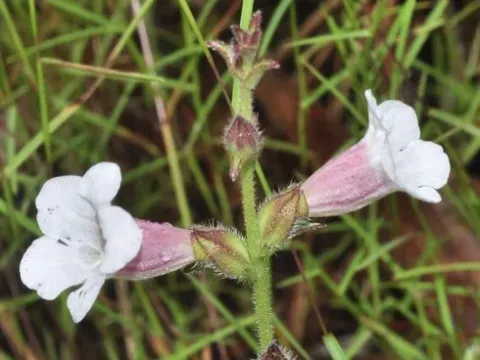
Centranthera
Centranthera
Sowing occurs primarily at the onset of the rainy season, when the soil moisture content is sufficient to trigger germination processes.
What the section contains


Centranthera
Seeds of this genus require specific chemical signals from the roots of host plants to break dormancy and initiate root development.
Agricultural attempts to cultivate these plants focus on maintaining a high density of host plants to facilitate effective parasitism.
Timing the sowing process is crucial as the viability of the seeds decreases significantly if the host roots are not reached within a short time.
Surface sowing or shallow coverage is recommended to prevent suffocation of the delicate seedlings during their initial attachment phase.
Centranthera belongs to the Orobanchaceae family and is known for its hemiparasitic nature, drawing water and nutrients from the roots of other plants.
The native range of this genus spans tropical and subtropical regions of Southeast Asia and Northern Australia.
These plants thrive in high-humidity environments where stable temperatures between 25°C and 30°C are maintained throughout the year.
Well-drained soils are essential to prevent root rot, while acidic to neutral pH levels support the overall health of the parasitic-host complex.
Adequate sunlight exposure is necessary for the plant to conduct photosynthesis, despite its supplementary nutrient intake from the host.
While Centranthera is not a traditional food crop, its reproductive potential is linked to the density and health of the host populations.
Successful colonization of hosts can lead to high seed production rates, ensuring the survival of the species across successive generations.
Experimental studies suggest that under optimal conditions, a single plant can produce thousands of minute, wind-dispersed seeds.
Biomass accumulation is moderate compared to autotrophic plants, as energy is shared between the parasite and the host.
Effective management of these populations requires monitoring the seed bank in the soil over several growing seasons.
The primary threats include habitat destruction, which reduces the availability of essential host species for the parasite's survival.
Soil pathogens that target the roots of the host plants indirectly exert a negative pressure on the Centranthera population.
Excessive use of herbicides designed to clear fields often leads to the unintended eradication of hemiparasitic species like Centranthera.
Invasive weed species can outcompete the hosts, thereby depriving the Centranthera of the necessary resources for completion of its life cycle.
Climate instability, particularly prolonged drought, poses a major risk by causing desiccation of the delicate haustorial connections.
Harvesting is generally not performed for agricultural purposes, as the plant is often considered a botanical specimen or a wild species.
Seed collection is typically done by gathering mature capsules in the dry season before they dehisce and disperse their contents.
Care must be taken during collection to avoid crushing the fragile stems, which remain prone to damage even after seed maturity.
Preservation of collected material requires low-humidity storage conditions to prevent fungal growth on the seeds.
Botanists recommend documenting the host species at the time of harvest to maintain accurate records of the plant's ecological associations.