
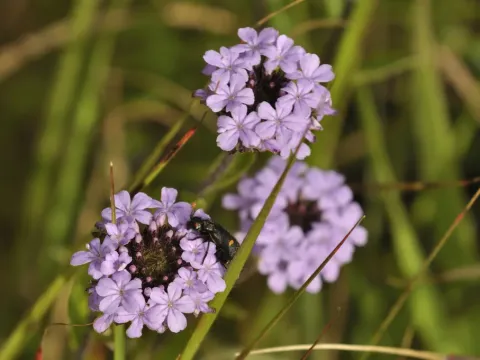
Buchnera
Buchnera
The genus Buchnera belongs to the Orobanchaceae family and is recognized primarily for its semi-parasitic life cycle. These plants are capable of photosynthesis but still require attachment to a host plant's roots to thrive.
What the section contains


Buchnera
They are widely distributed across the tropical and subtropical regions of the world. Native habitats include open grasslands, savannas, and woodlands in Africa, Asia, and the Americas, where they are adapted to diverse light conditions.
Botanically, these plants are often characterized by slender stems and small, distinctive flowers. The presence of haustoria, specialized organs for root connection, is the hallmark of their evolutionary adaptation to nutrient-limited environments.
The plant requires specific soil conditions and the presence of suitable host species to establish successfully. Their growth is tightly coupled with the phenology of the surrounding vegetation, which acts as their nutritional support.
While they play a role in natural ecosystems, their impact on agriculture is generally negative. Because they can infect the roots of commercial crops, they are considered parasitic weeds in several agricultural settings.
Buchnera poses a significant challenge to farmers in tropical regions. By diverting water and nutrients from the host plant, it significantly hampers crop vigor, leading to reduced yields and inferior seed quality.
The parasitic nature of the plant means that it can exacerbate the effects of existing soil-borne pathogens. Host plants weakened by Buchnera attachment become more susceptible to fungal and bacterial infections.
Effective management strategies often focus on cultural practices. Crop rotation, specifically incorporating non-host species, is essential to starve the parasite populations in the soil over time.
Another approach involves the use of catch crops that trigger the germination of Buchnera seeds without allowing for successful attachment, thereby depleting the soil seed bank.
Mechanical control and sanitation are crucial for long-term field management. Preventing the weed from reaching the flowering stage is mandatory to ensure that the persistent seed bank is not replenished.