
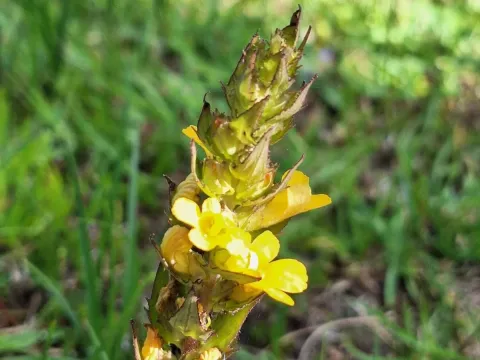
Alectra
Alectra
Alectra is a genus of parasitic plants belonging to the Orobanchaceae family. It is not a cultivated crop but a major agricultural pest known for being a destructive root parasite that primarily targets legumes and other broad-leaved crops across Africa, Asia, and parts of the Americas.
What the section contains
Alectra
The parasite attaches to the host's roots via haustoria, specialized structures that penetrate the host tissue to extract water, nutrients, and photosynthates. This process severely stunts the host plant, often causing chlorosis, wilting, and in many cases, total crop failure before the plant can reach maturity.
The most economically damaging species is Alectra vogelii, which poses a severe threat to cowpea, soybean, and groundnut production. Due to its life cycle, it can cause substantial yield reductions, sometimes exceeding 50% in heavily infested areas, undermining food security in vulnerable regions.
Alectra plants are distinct in that they produce small, highly persistent seeds that can remain viable in the soil for over a decade. This dormancy mechanism allows the parasite to wait for the host's chemical signals before germinating, making it extremely difficult to eradicate from affected soil through traditional tillage alone.
Management of Alectra relies on an integrated pest management approach. This includes the breeding of resistant crop varieties, the use of trap crops that trigger germination without supporting the parasite, and strict field sanitation practices. Controlling this weed requires long-term planning, as persistent seed banks are a hallmark of this parasitic threat.