
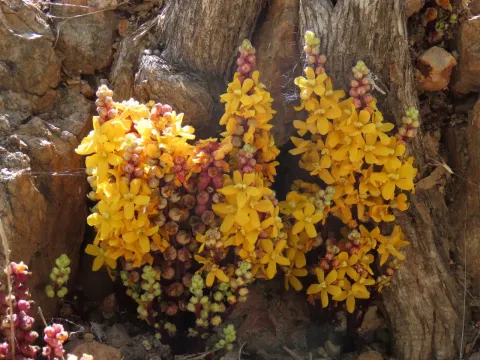
Alectra kirkii
Alectra kirkii
Alectra kirkii is a root-parasitic plant belonging to the Orobanchaceae family. As an obligate parasite, it relies entirely on its host for essential nutrients and water, as its photosynthetic capabilities are extremely limited due to the absence of significant chlorophyll.
What the section contains
Alectra kirkii
The plant is primarily found in tropical Africa, where it has evolved to colonize the root systems of various economically important crops. Its geographical range is tied to the presence of compatible hosts and suitable climatic conditions that support the parasitic cycle.
Botanically, Alectra kirkii is characterized by its specialized haustoria, which allow it to penetrate and integrate with the xylem and phloem of host roots. This physiological bridge facilitates the transfer of sugars and mineral elements from the crop to the parasite.
The environmental requirements for Alectra kirkii center on the availability of chemical exudates from host roots, which act as a trigger for seed germination. This specialized requirement ensures that the parasite only germinates when a host is within physical proximity.
In terms of soil, it thrives in environments that provide adequate aeration and temperature fluctuations favorable for the germination process. Its survival strategy depends on maintaining a large, persistent seed bank in the soil that can survive across several seasons.
The primary threat posed by Alectra kirkii is the severe depletion of host plants such as sorghum, maize, and various legumes. The physiological stress caused by the parasite leads to significant stunting, chlorosis, and reduced grain yield across infested fields.
Agricultural productivity is directly compromised by the parasite's ability to drain water and nutrient resources intended for the crop's development. This often results in irregular patches of dying plants throughout the agricultural field, leading to localized crop failure.
The spread of this weed is primarily driven by the movement of soil containing seeds and the lack of crop rotation. Since the seeds are minute and highly resilient, they can persist in the soil for years, waiting for an opportunity to infect a new host plant.
Control measures are challenging and usually involve the use of trap crops that stimulate germination without allowing the parasite to attach. Implementing long-term crop rotation cycles is often necessary to reduce the seed bank density to manageable levels for farmers.
Furthermore, indirect threats include increased vulnerability of the host to secondary pathogens such as soil-borne fungi. Once the parasite disrupts the host's root structure, the plant becomes highly susceptible to rotting and further infections, exacerbating overall losses.