
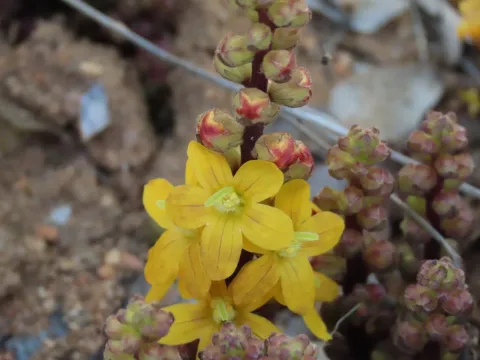
Alectra orobanchoides
Alectra orobanchoides
Alectra orobanchoides is a specialized obligate root parasitic plant belonging to the Orobanchaceae family. Lacking chlorophyll and the ability to perform photosynthesis, it relies entirely on the host plant for water, minerals, and carbohydrates, which it accesses through specialized organs called haustoria.
What the section contains
Alectra orobanchoides
The species is primarily native to regions in Africa, where it causes significant damage to various crops, particularly legumes. Its natural distribution is linked to the availability of specific host plants that release chemical compounds required for the parasite's seed germination.
Biologically, Alectra orobanchoides is a master of survival; its seeds can lie dormant in the soil for several years. Germination is only triggered by specific chemical signals (strigolactones) exuded by the roots of a potential host, ensuring the parasite does not waste energy in the absence of a food source.
The plant thrives in warm, tropical, and arid climates where moisture is intermittent. It is most commonly found in well-drained, sandy soils that provide an optimal environment for the parasite to establish a connection with the host's root system before the host plant fully matures.
Agricultural management is challenging because the majority of the parasite's development occurs underground. Integrated pest management, including the use of trap crops that stimulate false germination, and the implementation of long-term crop rotation schemes are considered the most effective control measures.
The primary threat posed by this plant is the substantial depletion of host resources, leading to stunted growth, reduced pod formation, and eventual death of the host. In severe infestations, the cumulative damage can result in total crop failure for smallholder farmers dependent on susceptible legume varieties.