
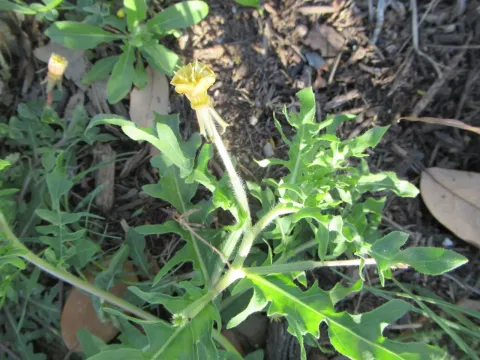
Cutleaf evening primrose
Oenothera laciniata
The cutleaf evening primrose (Oenothera laciniata) is an annual or biennial herbaceous plant belonging to the Onagraceae family. It is primarily cultivated for its seeds, which are rich in essential fatty acids. Sowing usually occurs in early spring once soil temperatures reach at least 10-12 degrees Celsius.
What the section contains
Cutleaf evening primrose
Due to the small size of the seeds, they should be sown at a shallow depth of 1-2 centimeters. Achieving good soil-to-seed contact is essential for uniform germination, which is why rolling the field immediately after planting is a standard recommended practice.
Optimal row spacing ranges between 45 and 60 centimeters to allow for mechanical weed control and sufficient aeration. Seed rate should be adjusted based on the laboratory germination test to ensure an optimal stand density without overcrowding.
Seedlings typically emerge within two weeks, provided there is adequate surface moisture. Given the slow early growth of this crop, keeping the field free of competitive weeds is crucial during the first 30 days after emergence.
Using precision seed drills is highly recommended to minimize seed waste and ensure uniform distribution, which ultimately leads to higher yield consistency across the entire cultivated area.
This crop thrives in light, well-drained sandy or loamy soils. It is notably sensitive to waterlogging, which can cause root rot, so field selection should focus on areas with excellent drainage characteristics.
Oenothera laciniata is a highly photophilous plant, meaning it requires full exposure to sunlight for optimal oil accumulation in the seeds. Shaded areas significantly reduce the yield and quality of the final oil product.
It displays remarkable drought tolerance, making it an excellent choice for arid or semi-arid regions. The ideal temperature range for vegetative development is between 20 and 25 degrees Celsius, though it is adaptable to various environments.
The plant performs well in soils with a pH ranging from 5.5 to 7.0. While it can survive in nutrient-poor soils, applying balanced phosphorous and potassium fertilizers can significantly boost seed productivity.
Maintaining soil structure and preventing the formation of a hard crust after rainfall is important for root development. Regular inter-row cultivation helps in both moisture retention and soil aeration.
Yield stability for cutleaf evening primrose depends heavily on pollination efficiency. Introducing honeybees near the field during the flowering period can substantially increase the percentage of set seeds and overall production.
Success is measured by the total weight of harvested seeds and their oil content. With proper management and pest control, farmers can achieve consistent yields that are highly valued by the pharmaceutical and cosmetic industries.
Harvest timing is a critical factor in yield maximization, as late harvesting often leads to significant seed loss due to the natural opening of mature seed pods. Effective desiccation techniques are used to synchronize pod ripening.
Because the oil is a high-value commodity, the economic return on this crop is generally strong despite the specialized harvesting requirements. Market demand for high-quality plant-based oils continues to grow globally.
Ongoing selection of plant varieties with more robust pods that are resistant to shattering is helping to reduce harvest losses and increase the volume of marketable seed per hectare.
Powdery mildew is the most common disease for this crop, particularly in humid or stagnant air conditions. Improving field ventilation and adhering to recommended plant spacing are key preventative measures.
Insects like certain lepidopteran larvae can pose a threat by feeding on leaves and generative organs. A robust monitoring program is essential to detect early infestations and apply control measures if necessary.
Root rots may develop in poorly drained fields, highlighting the importance of proper site selection and rotation. Avoid planting evening primrose in fields where moisture accumulation is a chronic issue.
Aphid colonies can occasionally settle on young shoots, weakening the plant. Using selective insecticides and encouraging natural predators can help keep aphid populations below the economic threshold of damage.
Integrated pest management (IPM) practices, including the destruction of crop residues after harvest, are vital to preventing the overwintering of pathogens and pests within the soil profile.
The harvest phase begins when seed pods turn brown and dry. It is essential to monitor the maturity process closely, as dry pods will easily shatter, releasing the seeds onto the ground before they reach the combine.
Direct combining is the standard harvest method, requiring careful adjustments to the reel and drum speed to prevent mechanical damage to the seeds. Slow drum speeds are preferred to maintain seed integrity.
In cases of uneven ripening, swathing may be used to allow seeds to dry naturally within the pods before threshing. This method can help mitigate losses caused by early shattering in the field.
Immediate cleaning and drying of the harvested seeds are mandatory to prevent spoilage and rancidity of the delicate oils. Moisture content must be reduced to approximately 8-10 percent for long-term storage.
Proper storage in cool, dry, and clean facilities is necessary to protect the quality of the oilseed. Sealed containers or well-ventilated silos help maintain the nutritional profile of the seeds until processing.