
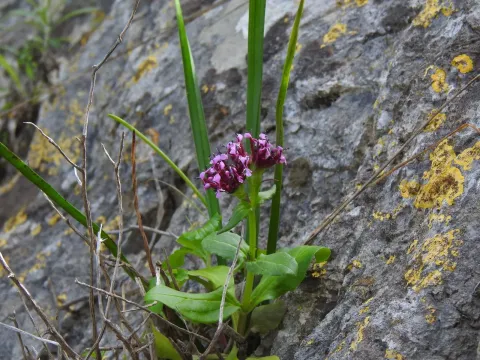
Fedia scorpioides
Fedia scorpioides
Fedia scorpioides, a member of the Caprifoliaceae family (formerly Valerianaceae), is primarily grown as an annual crop. Successful establishment requires a clear understanding of its seed dormancy, which often necessitates cold stratification to ensure uniform germination.
What the section contains
Fedia scorpioides
The optimal sowing time is typically in late autumn, allowing the seeds to undergo natural overwintering, which breaks dormancy and promotes early growth when temperatures rise in spring.
For spring sowing, it is essential to employ pre-treatment methods such as cold moist stratification or mechanical scarification to counteract the seed's hard coat and increase germination rates.
Sowing should be carried out in rows spaced 20–30 centimeters apart, providing enough space for the plants to develop robust leaf rosettes before the rapid vertical growth phase.
Proper seed placement at a depth of no more than 2 centimeters is crucial, as the small seeds possess limited energy reserves and may fail to emerge if planted too deep in the soil profile.
The crop thrives in well-drained, light-textured soils rich in organic matter. Sandy loams are generally preferred, as they allow for better root development and prevent excess moisture accumulation.
Soil pH should ideally be neutral or slightly alkaline. Acidic conditions often inhibit growth and lead to chlorosis, requiring corrective liming prior to the establishment of the crop.
Fedia scorpioides is moderately drought-tolerant, yet regular moisture during the vegetative phase significantly improves the yield and quality of the green forage produced.
Light availability is critical; the plant is highly photophilic and should be grown in open fields without interference from surrounding shade-casting vegetation.
The climate should be temperate, as the plant is susceptible to heat stress, which triggers premature bolting and shifts the plant's resources from biomass production to flowering.
Aphids are among the most common pests, as they colonize the tender foliage and shoot tips, leading to stunted growth and potentially spreading viral pathogens.
Powdery mildew is a frequent fungal threat in areas with high humidity, poor air circulation, or overcrowding, necessitating careful management of planting density.
Root rot, often caused by pathogens like Pythium or Phytophthora, can become a major concern in poorly drained soils where the root zone is chronically saturated.
Integrated pest management strategies, focusing on crop rotation and the use of resistant varieties where available, are essential for maintaining sustainable yields.
Regular inspection of the fields allows for early detection of pest clusters, enabling targeted intervention that minimizes the need for broad-spectrum chemical treatments.
For forage purposes, harvesting should be performed at the early flowering stage. This period ensures the best balance between biomass quantity and the nutritional value of the plant tissue.
If the objective is seed production, harvest timing must be delayed until the seed heads turn brown and become fully mature, while remaining watchful for potential shattering.
Mechanical harvesting requires precise calibration to handle the delicate seeds gently, minimizing physical damage during the threshing process and reducing total field losses.
Post-harvest handling involves thorough drying to a moisture content of 12–14%, followed by cleaning to remove debris, ensuring the longevity of the harvested seed material.
Proper storage in cool, dry, and rodent-proof facilities preserves seed viability, which is the primary factor for achieving consistent production in the subsequent planting cycle.